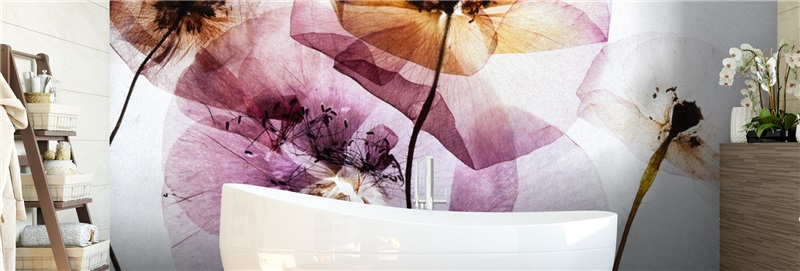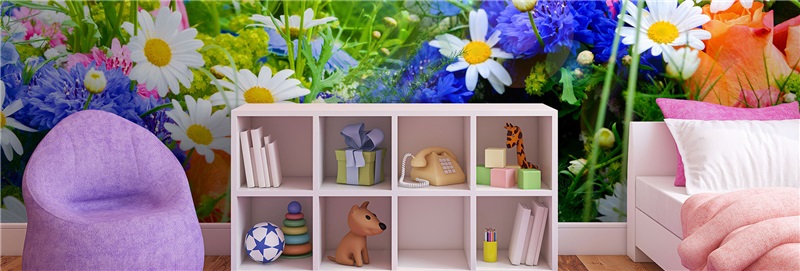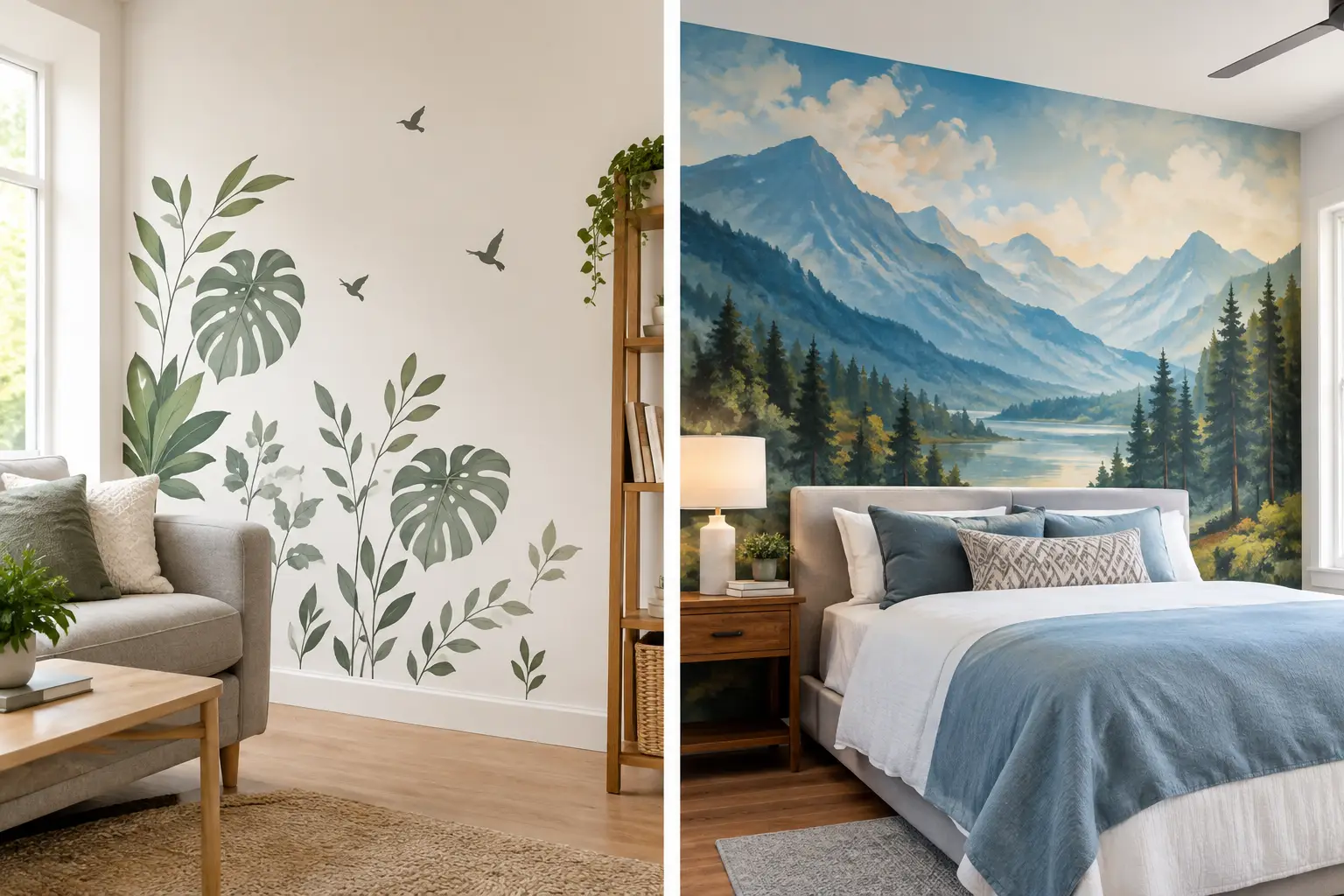
A bare wall behind a sofa, bed, or reception desk can feel like a missed design opportunity. When comparing wall decals versus murals, the real choice is not simply removable versus permanent. It is about how much visual presence the room needs, how precise the installation must be, and whether you want an accent or a fully composed environment.
Decals can add a small graphic moment with very little commitment. A custom wall mural can change the perceived depth, mood, and identity of an entire room. Both have a place in interior design, but they solve different problems.
Wall Decals Versus Murals: The Essential Difference
Wall decals are individual cut shapes, lettering, or small graphic elements applied directly to the wall. Think scattered stars in a nursery, a quote above a desk, a simple botanical silhouette, or a logo in a small office. Because the wall color remains visible around and between the pieces, decals tend to read as decoration added to an existing room.
Murals are large-format printed wall coverings designed to cover a substantial section of a wall, often from edge to edge or floor to ceiling. A forest scene can make a bedroom feel more restful; a world map can give a playroom or classroom a clear purpose; an abstract composition can establish color and energy in a lobby. Rather than sitting on the wall, a mural becomes part of the room’s architecture.
The difference matters most when you stand back. Decals are generally seen as individual objects. Murals are experienced as an atmosphere.
Choose Decals for Small, Simple Accents
Wall decals make sense when the design goal is light, graphic, and limited in scale. They are especially useful for temporary decorating, narrow wall areas, or spaces where existing paint color is doing much of the visual work.
A renter may use decals to personalize a home office without covering an entire wall. A parent might add a few animal shapes near a crib or bookshelf. Retailers can use cut lettering for short-term promotions, directions, or small branded messages. In each case, the wall remains the background, and the decal provides a focused layer of detail.
Their modest scale is also their limitation. A few decals cannot usually solve a wall that feels empty because it lacks proportion, color, or depth. On a large living room wall, small isolated graphics can look undersized unless they are part of a carefully planned composition. If you find yourself adding more and more pieces to make an impact, a mural may be the more cohesive option.
Where decals tend to work best
Decals are a practical choice for lettering, logos, small nursery motifs, calendar or organizational elements, and temporary campaign graphics. They also work well when the surface has interruptions such as shelving, switches, artwork, or multiple doors.
They are less effective when a room needs visual calm. Many separate shapes can create a busy effect, particularly in a bedroom, wellness space, or client-facing area where a unified backdrop would feel more intentional.
Choose a Mural When the Wall Should Set the Mood
A mural is often the better answer for a feature wall with real visual responsibility. This may be the wall behind a bed, dining table, sofa, front desk, or conference table. These are the places where scale counts because the wall is already a focal point.
A large scene, pattern, or photograph can also alter how the room feels. Soft beach horizons and misty forests can make a compact room feel more open. Dark florals, cityscapes, and layered abstract art can create drama in an otherwise neutral space. In a child’s room, a mural can establish a theme without requiring every item in the room to match it.
Custom sizing is one of the strongest advantages. A mural made to your wall dimensions avoids the awkward borders and repeated pattern breaks that can happen with off-the-shelf décor. It can be designed around a headboard, furniture placement, windows, or architectural features. For commercial interiors, this dimensional control supports a more polished result across lobbies, treatment rooms, restaurants, and offices.
At Murale Design, murals are printed on adhesive vinyl film with durable latex inks and an anti-scratch finish, then produced to suit the wall’s dimensions. That construction is intended for painted drywall installations where the design needs to look considered and hold up to everyday use.
Installation: Easy Application Versus Visual Precision
Decals are generally faster to apply because each element is small and can be positioned independently. That flexibility can be helpful, but it also makes alignment a design decision. Straight lettering, evenly spaced shapes, and symmetrical arrangements require measuring and patience. One crooked word or uneven row can be noticeable on a clean painted wall.
Murals require more preparation and a more deliberate installation process. Large designs are typically supplied in panels that must line up accurately so the image flows across the wall. The wall should be clean, dry, smooth, and fully cured if it has been recently painted. Textured surfaces, flaking paint, dust, moisture, or fresh paint can affect adhesion and the finished appearance.
This does not mean murals are only for professionals. A carefully prepared wall, clear panel order, and a methodical pace can make the work manageable for many homeowners. Still, the size of the graphic means that measuring, leveling, and smoothing deserve attention. For a high-visibility commercial space or a large multi-panel wall, professional installation may be worth considering.
Measure the wall, not the idea
Whether you choose decals or a mural, measure the actual installation area rather than estimating from furniture or room dimensions. For murals, record the full width and height at several points because walls are not always perfectly square. Note outlets, vents, windows, trim, and built-in elements before finalizing artwork.
For a personal photo mural, image quality matters just as much as wall measurements. A phone image may look sharp on a small screen but become soft when enlarged to wall scale. A production team that reviews image resolution before printing can help prevent a disappointing result and recommend suitable sizing or artwork adjustments.
Durability, Removal, and Everyday Life
If you expect to change the room frequently, decals may feel like the lower-commitment choice. Their smaller size can make removal and replacement more approachable, especially when you are updating a child’s interests or rotating seasonal displays. However, removability depends on the decal material, wall condition, paint quality, and how long it has been installed. No wall graphic can promise identical results on every painted surface.
Murals are a more committed design decision, but that commitment often creates a better long-term visual return. A well-chosen mural can remain relevant for years because it is tied to mood, material, landscape, color, or brand identity rather than a short-lived trend. Durable printing and a scratch-resistant finish are particularly valuable in busy households, hallways, hospitality settings, and workspaces.
The best choice depends on the wall’s role. A temporary message above a desk may call for decals. A nursery feature wall that needs to grow from baby years into childhood may benefit from a mural with a flexible theme, such as a woodland scene, map, soft geometric design, or sky.
Cost Should Be Judged by Impact, Not Only Size
Decals usually cost less upfront because they use less material and cover less surface area. They can be a smart budget choice when the desired effect is genuinely small. But comparing price alone can be misleading. If a large wall needs a finished look, several smaller decorative purchases may still leave the room feeling incomplete.
A mural has a higher visual and material investment because it is custom-sized and printed at room scale. In return, it can replace the need for multiple pieces of wall art and establish the color direction for the rest of the room. It also creates stronger visual consistency in spaces where first impressions matter, such as a boutique, office reception area, vacation rental, or staged home.
For designers and commercial buyers, the calculation often includes more than the product cost. Custom dimensions, coordinated color, production support, and confidence that the final artwork will fit the specified wall can reduce revisions later in the project.
A Better Way to Decide
Start by asking what you need the wall to do. If it only needs a small message, motif, or playful detail, decals are likely enough. If it needs to define the room, introduce depth, support a design concept, or create an immediately memorable backdrop, choose a mural.
Then consider viewing distance. Decals perform best when people will notice them up close. Murals are designed to work from across the room as well as near the wall, where printed detail and texture become part of the experience.
Finally, choose artwork with a lifespan that matches your plans. A simple decal can be wonderfully spontaneous. A custom mural is most rewarding when the image feels personal, calming, or visually strong enough to live with every day. The right wall treatment should make the room feel more like yours the moment you walk in.