A blank rental wall can make even carefully chosen furniture feel temporary. The goal of this renter friendly wall decor guide is not to make your home look like a staged apartment. It is to create a room that feels personal, polished, and easy to restore when your lease ends.
The best approach starts with one practical question: what can your specific wall finish handle? Painted drywall, textured walls, fresh paint, brick, and plaster all respond differently to adhesives and hardware. Read your lease, ask for written approval when necessary, and test any adhesive in a discreet spot before committing to a full wall.
Start With the Wall, Not the Artwork
Decorating a rental is often less about finding a perfectly temporary product and more about matching the method to the surface. A lightweight print may be safe with removable strips on smooth, fully cured paint, while a heavy frame may require a picture hook and a small repair later. That trade-off can be worth it when the result is secure and the repair is straightforward.
Before measuring or ordering, check for peeling paint, moisture marks, heavy texture, or recent patching. Adhesives need a clean, dry, stable surface. Freshly painted walls should cure according to the paint manufacturer’s guidance before anything adhesive is installed. If a wall feels uncertain, choose a freestanding or fabric-based solution instead of asking an adhesive to do too much.
Take photos of the wall before decorating and again before moving out. It is a small habit that gives you a clear record of the condition you received.
Choose One Wall That Changes the Room
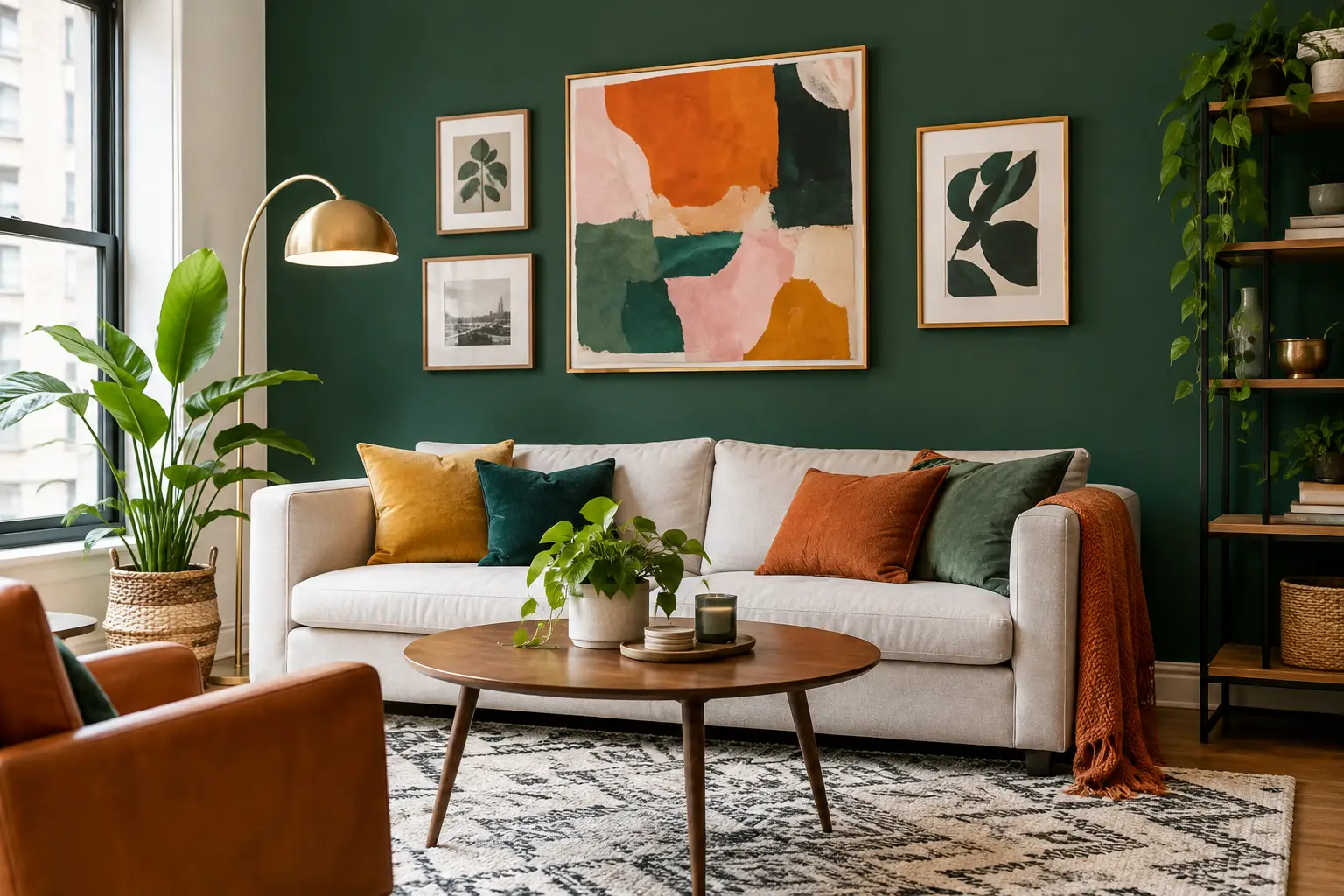
A rental does not need decor on every surface. One intentional focal wall can make a bedroom feel calmer, give a home office more character, or turn a plain nursery into a finished space. In a living room, the wall behind the sofa is a natural candidate. Behind a bed, a large-scale scene can function like a headboard. In a compact dining area, art or a mural on the wall facing the entry gives the space an immediate point of view.
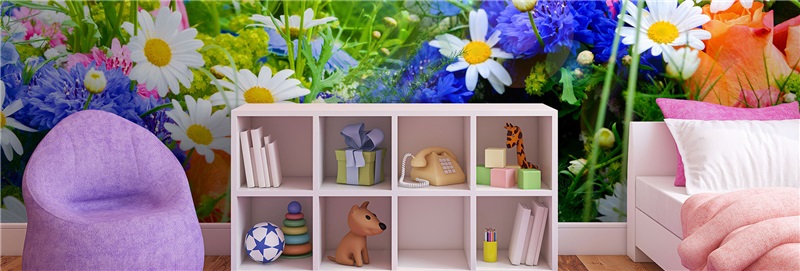
Large-format decor is especially useful in rentals because it creates impact without adding visual clutter. A forest scene can bring depth to a windowless room. A soft floral design can warm a neutral bedroom. A cityscape, abstract pattern, or world map can define an office without relying on more furniture.
Scale matters more than renters often expect. A tiny piece of art centered on a wide wall can make the room feel unfinished. When you want a gallery effect, use several pieces with a shared color palette or frame finish. When you want a quieter, more architectural result, choose one oversized canvas print, tapestry, or wall-covering design.
The Renter Friendly Wall Decor Guide to Materials
Each material solves a slightly different problem. The right choice depends on how long you expect to stay, how much visual impact you want, and what your landlord permits.
Canvas prints and framed art
Canvas prints are a practical choice for adding color, photography, or painterly texture without covering the entire wall. They are lighter than many glass-framed pieces and can work well with appropriate hanging hardware. For a personal result, a favorite travel photograph, pet portrait, or family image can become a meaningful focal point, provided the original file is sharp enough for the intended print size.
Framed art offers structure and contrast, particularly in modern or traditional interiors. It does require more thought around weight. Use hardware rated for the piece, rather than relying on adhesive strips beyond their stated capacity. A small nail hole is usually easier to patch cleanly than paint pulled away by an overstressed adhesive.
Tapestries and textile wall decor
Tapestries soften rooms that have hard flooring, simple blinds, and minimal acoustic absorption. They are useful above a bed, behind a desk, or in a college-style first apartment where you want substantial coverage without permanent construction. Because fabric hangs differently from paper or vinyl, it also brings a relaxed, layered look.
Use a lightweight rod, discreet clips, or hooks suited to the wall and the tapestry’s weight. Keep the textile away from areas prone to splashes, steam, or cooking residue. In a kitchen or bathroom, a wipeable print is usually the more practical option.
Adhesive wall graphics and murals
Wall murals can create the most dramatic transformation with the least added furniture. They are ideal when you want a room-scale landscape, an illustrated children’s theme, a graphic abstract, or a custom image sized for one exact wall.
But renters should treat adhesive wall coverings carefully. Not every adhesive vinyl is designed to be removed without risk, and results depend on the paint, wall preparation, installation time, and removal technique. Get your landlord’s approval before installing a mural, confirm the material’s removal expectations with the supplier, and test a sample if available. Never assume that the words “wallpaper” or “vinyl” automatically mean deposit-safe.
If your lease allows it, accurate measuring is essential. Measure the full width and height in several places, noting baseboards, crown molding, windows, outlets, and any uneven ceiling line. Custom panels should be planned around the wall’s real dimensions, not the dimensions listed on a floor plan. Professional image review is also valuable when using a personal photo, since a file that looks good on a phone may not have enough resolution for a full wall. Murale Design can help customers assess image quality and prepare custom dimensions before production.
Make Temporary Decor Look Intentional
The difference between a personalized rental and a collection of temporary fixes is usually composition. Choose a simple direction before you buy: coastal neutrals, saturated botanicals, warm modern shapes, black-and-white photography, or a child’s favorite animals. Repeating two or three colors across art, pillows, rugs, and bedding gives the room continuity.
Then consider sightlines. What do you see first from the doorway? What sits behind your video-call chair? Which wall is visible from the sofa or bed? Put the strongest visual there. Less-visible walls can support the room with smaller art, mirrors, or a narrow picture ledge if permitted.
Lighting will change your choice as much as color does. Dark forest murals look rich in rooms with good natural light but may feel heavy in a dim hallway. Bright beach imagery can open up a small bedroom, while a subdued abstract print can make a work area feel focused. Order samples or review colors on more than one screen when color matching is important.
Install With a Move-Out Plan
Keep product instructions, leftover materials, touch-up paint details, and photos in one folder from day one. That preparation makes removal far less stressful.
For adhesive products, follow the recommended temperature and removal instructions rather than pulling quickly from a corner. A slow, low-angle pull is generally gentler on paint. Heat may be recommended for certain materials, but use only the method approved for that product and wall type. If paint begins to lift, stop rather than forcing it.
For nail holes, save a small amount of matching wall paint if your landlord provides it, or ask for the paint brand and finish early in your tenancy. Lightweight spackle, a careful sanding, and a small touch-up can address minor holes. Larger damage, water staining, or peeling paint may need a professional repair, especially before a final inspection.
Decorate for the Time You Have
A one-year lease and a five-year rental call for different decisions. If you expect to move soon, prioritize decor that travels well: canvas prints, textiles, mirrors, and personal photography that can be reused in your next home. If you plan to stay longer and have landlord approval, a custom feature wall may be worth the planning because it changes how the room feels every day.
Your rental does not need permanent construction to feel like yours. Choose a wall you see often, use materials that respect its finish, and give the design enough scale to matter. The result can be personal now and manageable when it is time to pack.