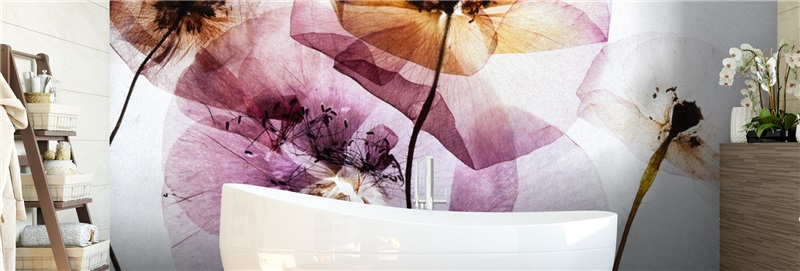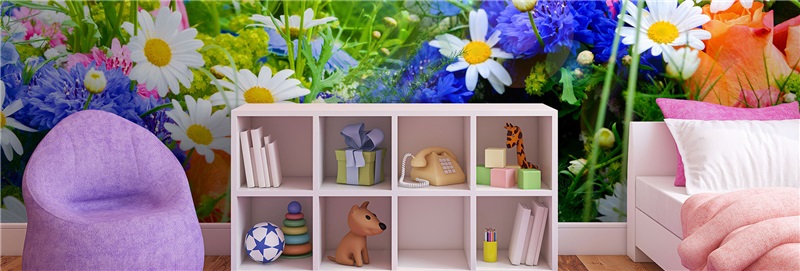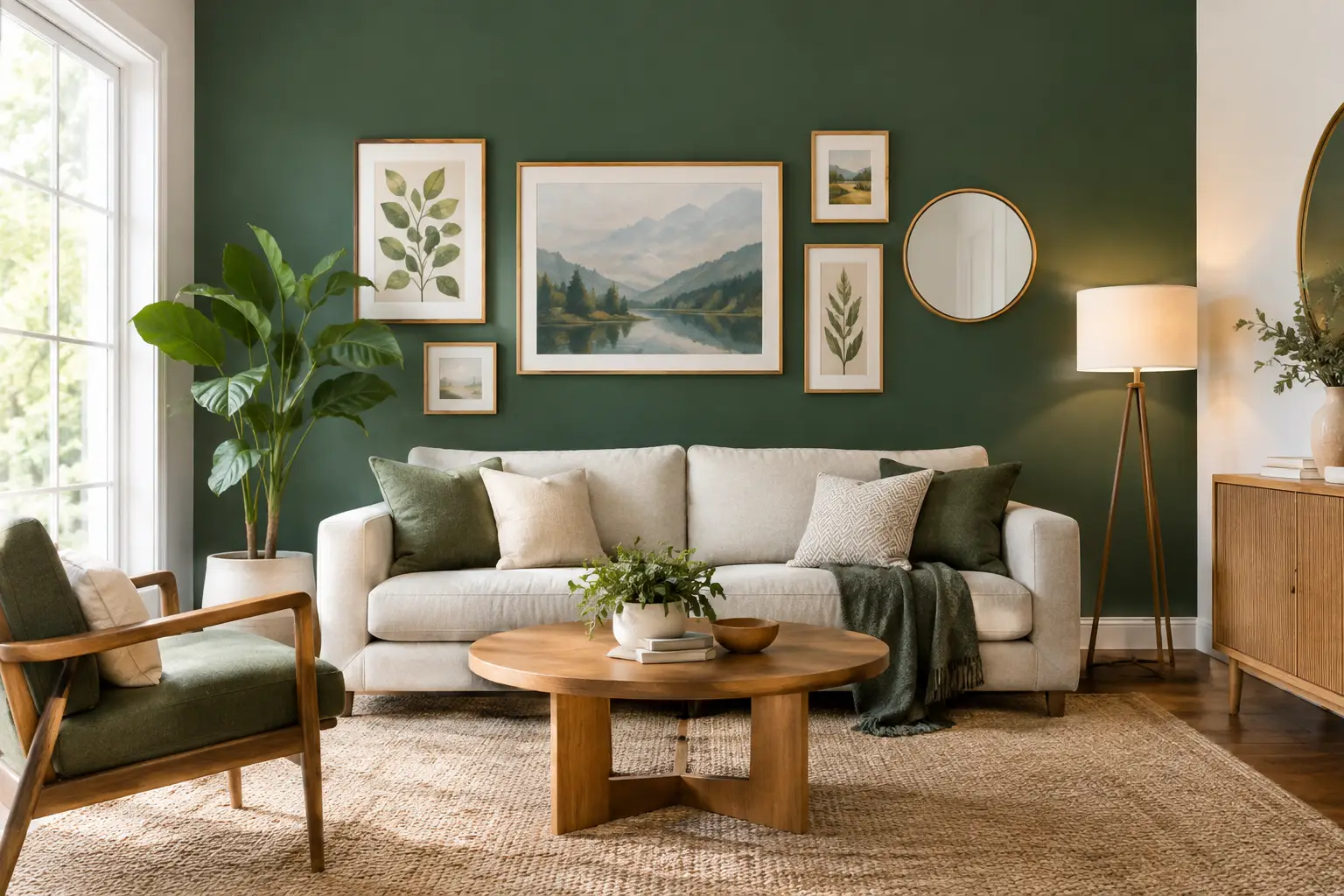
A blank wall is rarely just a blank wall. It is often the largest uninterrupted surface in the room, and the right opportunity to create a statement wall that gives the entire space a point of view. Whether you are refreshing a bedroom, planning a nursery, furnishing a home office, or designing a customer-facing business, the goal is not simply to add color. It is to make the room feel intentional.
A successful statement wall creates focus without fighting the furniture, lighting, or architecture around it. That takes more than selecting an image you like. Scale, wall condition, viewing distance, and the mood you want to create all affect the final result.
Start With the Wall That Already Has a Role
The strongest statement wall is usually one the room naturally asks you to notice. In a bedroom, that is often the wall behind the bed. In a living room, it may be the wall behind the sofa or the first surface visible from the entry. A dining room can support a more dramatic feature wall, while an office may benefit from an image that adds depth without making video calls feel visually busy.
Before choosing a design, stand at the main entrance to the room and consider where your eye lands first. If the wall is interrupted by several doors, tall windows, or built-in cabinetry, a full-wall design may feel fragmented. That does not mean the wall cannot work. It may simply call for a quieter pattern, a more open landscape, or a custom crop that places the focal area in the uninterrupted section.
Walls behind a headboard, console table, or banquette are often excellent candidates because furniture grounds the mural rather than competing with it. On the other hand, a wall filled with open shelving or a gallery arrangement may already have enough visual activity. Let the room have one clear lead instead of several competing focal points.
Choose the Feeling Before the Image
A statement wall should serve the atmosphere you want to live or work in. Selecting an image solely because it looks striking on a screen can lead to a room that feels disconnected once it fills eight or ten feet of wall space.
For a calming bedroom, consider misty forests, soft florals, coastal horizons, muted abstract forms, or a personal landscape photograph with room to breathe. A child’s room can handle playful animals, maps, stars, or imaginative scenery with details to discover over time. In a living area, a cityscape, oversized botanical, architectural image, or layered abstract design can establish a more confident, collected look.
Commercial interiors need the same level of thought. A wellness space may call for natural textures and quiet scenery, while a restaurant, retail store, or creative office may benefit from bolder color and larger-scale art. The right design supports the experience people should have in the space, not just the style of the wall itself.
Color matters, but it does not need to match every object in the room. A statement wall works best when it relates to the existing palette. Pull one or two colors from the mural into pillows, bedding, an area rug, or a small accessory. That creates continuity while allowing the wall covering to remain the visual feature.
Get Scale Right Before You Order
Room-scale artwork changes quickly when it is printed large. Fine details that look delicate on a phone can become distracting at full height, while an image with too little resolution can lose clarity when enlarged. This is especially important for customer-supplied photos.
Measure the full width and height of the installation area, then measure around features such as outlets, switches, windows, and doors. Include baseboards and crown molding in your plan. If the mural will run from floor to ceiling, accurate measurements help ensure the image is sized for the wall rather than treated like a standard poster.
Think about viewing distance as well. A highly detailed city panorama can work beautifully across a large living room wall viewed from several feet away. A close-up floral or textured abstract may be more appropriate for a narrower hallway or powder room, where people experience the design at close range.
Cropping is another part of scale. You may love a photograph because of a person, pet, mountain peak, or building in the center. Before production, make sure that focal detail will not disappear behind a bed, sofa, or large cabinet. A professional design review can help position the important part of an uploaded image where it will remain visible after installation.
Consider a Custom Mural for a More Complete Effect
Paint can make a wall stand out, but a custom mural adds depth, movement, and a level of personalization that a single color cannot always provide. A misty forest can visually extend a small room. A wide beach scene can introduce openness to a windowless office. A custom family travel photo can turn a hallway into something far more meaningful than a pass-through space.
For the best result, choose artwork with enough resolution for the finished dimensions. Larger original files are generally better, particularly when the image will cover a broad wall. Avoid relying on screenshots, heavily compressed social media images, or photos taken in very low light. These can appear acceptable on a small device but reveal softness or digital artifacts once enlarged.
This is where production support makes a practical difference. Murale Design reviews image quality and helps customers assess whether their selected image is suitable for large-format printing. That guidance is valuable when you are working from a cherished personal photo and want a beautiful result without guessing how it will perform at wall scale.
Balance the Statement Wall With the Rest of the Room
Once the wall is visually active, the rest of the room needs a little restraint. This does not require an all-neutral space. It means choosing a hierarchy. If the mural is large, colorful, and detailed, let upholstery, curtains, and major furniture pieces be calmer. If the mural is subtle, you have more freedom to introduce patterned textiles or sculptural lighting nearby.
Texture can keep the room from feeling flat. A vinyl wall mural with a forest scene pairs naturally with wood, linen, woven shades, and matte black accents. A modern geometric design may look especially sharp with metal lighting, clean-lined furniture, and a few soft textiles to reduce the hard edges.
Lighting also deserves attention. Wall washers, sconces, or a nearby table lamp can bring out color and depth in the evening. Avoid placing a strong light source directly in front of a glossy framed artwork, but a properly finished wall covering is designed to be viewed as part of the room rather than as an object behind glass.
Prepare the Surface for a Finish That Lasts
Even the most beautiful design depends on a suitable installation surface. Painted drywall is typically the best foundation for adhesive vinyl mural wallpaper. The wall should be clean, smooth, dry, and fully cured if it has been recently painted. Dust, residue, flaking paint, and surface texture can interfere with adhesion or show through the finished mural.
Repair nail holes and dents first, then clean the wall according to installation guidance. If you are working with a newly painted surface, allow enough curing time before applying the material. Skipping this step can create adhesion issues that are much harder to correct later.
Plan for panel placement, too. Large-format murals are commonly produced in manageable vertical panels so they can be aligned carefully during installation. A level starting point matters. Taking time to prepare the wall and follow the panel sequence usually produces a cleaner finish than trying to rush through the application.
Renters should check lease terms before installing any wall covering. For a temporary space, it may be worth choosing one wall that makes the biggest impact rather than committing to a whole-room change. Homeowners may be more willing to use a mural as a long-term design element, especially in bedrooms, finished basements, or dedicated offices.
Let the Wall Say Something Specific
The most memorable statement walls are not chosen to follow a trend. They reflect a place, a memory, a favorite subject, or simply the kind of atmosphere that helps you feel at home. A custom mural is most effective when it gives the room a story and gives everyone who enters it a reason to look twice.
Choose a wall that deserves the attention, give the image enough space to work, and prepare the surface with the same care you gave the design. The result can make an ordinary room feel distinctly yours.