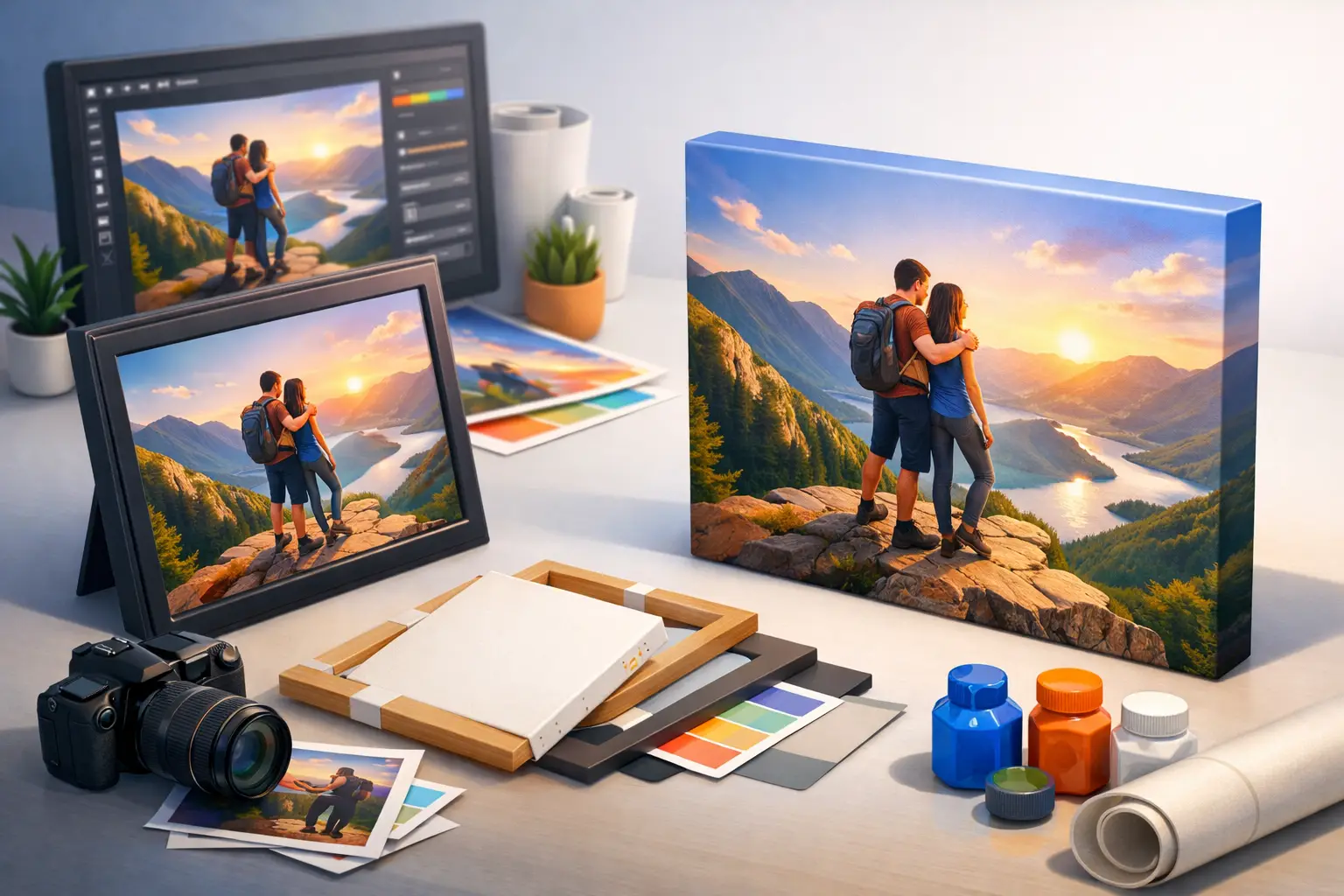
A great photograph deserves more than a spot in your camera roll. A custom canvas print from photo can give a favorite family moment, travel view, pet portrait, or original artwork a permanent place in the room - provided the image, size, and crop are chosen for the wall rather than just the screen.
Canvas has a relaxed, gallery-like presence that works especially well when you want art to feel personal without adding another frame or decorative layer. The strongest results come from treating the print as part of the interior plan: consider the viewing distance, surrounding colors, furniture scale, and the details that may change once an image is enlarged.
Choosing a Custom Canvas Print From Photo
Start with the photo that still holds your attention after the first look. Emotional value matters, but so does visual structure. Images with a clear subject, useful negative space, natural contrast, and a well-defined focal point often translate beautifully to canvas. A close-up of a child laughing, a dog against a simple background, a quiet shoreline, or an architectural view can all work because the eye knows where to land.
Be a little more selective with screenshots, social media downloads, heavily filtered photos, and images sent through messaging apps. These files are often compressed. They may appear sharp on a phone, then show softness, noise, or blocky color transitions when printed at a larger size.
If you have several versions of the same image, choose the original file from your phone, camera, or cloud library. Original files preserve more pixel information and give the print team more room to make a thoughtful recommendation. At Murale Design, image review and design support can help identify whether a chosen file suits the size you have in mind before production begins.
Resolution is about print size, not just file size
A photo's megabyte count does not tell the whole story. Pixel dimensions are more useful. An image that is 4,000 by 3,000 pixels contains far more enlargement potential than one that is 1,200 by 900 pixels, even if the files happen to be similar in storage size.
There is no single perfect number because canvas is usually viewed from farther away than a small framed photograph. A print above a sofa or bed may be admired from several feet back, while a canvas in a hallway is seen much closer. As the intended size grows, the image needs more detail to retain crisp edges and natural texture.
Avoid assuming that enlarging a small image in an editing app will create missing detail. Upscaling can sometimes improve the appearance of an image, but it cannot fully restore information that was never captured. If your favorite photo is borderline, a modest canvas size may look better than an oversized one. That is not a compromise in style - it is often the more polished design choice.
Match the Canvas Shape to the Image
Before selecting dimensions, look at the photo's native shape. Most phone images are close to a 4:3 proportion, while many professional camera images use 3:2. A square Instagram crop, a wide panorama, and a vertical portrait each ask for a different canvas format.
Forcing a landscape photo into a tall vertical canvas can mean losing the horizon, a person at the edge, or the space that gives the image its atmosphere. The same is true when turning a vertical portrait into a wide horizontal print. Cropping is not just a technical step. It changes the story of the photograph.
Place the key subject away from the very edge whenever possible. Canvas prints wrap around a stretcher frame, so details near the outer border may continue onto the sides or need to be trimmed. A little breathing room around a face, building, or pet makes the final composition more forgiving.
A square canvas suits centered subjects and graphic images particularly well. Vertical canvases bring height to a narrow wall and complement portraits, florals, doorways, and forests. Horizontal formats tend to feel at home over sofas, consoles, beds, and desks because they echo the proportion of the furniture below them.
Consider how the image will live in the room
The best size is rarely determined by the photo alone. It depends on the wall. A small canvas on a large blank wall can feel accidental, while an oversized image in a compact room may overpower everything around it.
As a starting point, art above furniture usually looks balanced when it spans roughly two-thirds to three-quarters of the furniture's width. This is a guideline rather than a rule. A dramatic panoramic landscape can extend wider, while a more intimate portrait may be intentionally smaller with plenty of blank wall around it.
Think about viewing distance as well. A highly detailed cityscape invites close looking, so it can work in an entryway or office. A soft, atmospheric beach photograph may have more impact across a living room, where its color and mood read from a distance. If the photo has visible grain or slight motion blur, placing it where viewers stand farther back can be a smart choice.
Prepare the Photo for Honest Color
Every screen is different. The bright blue water or warm sunset you see on a phone may look more intense than it does in print because screens create light, while printed canvas reflects it. This does not mean a print will look dull. It means the goal should be believable, well-balanced color rather than a screen-bright effect that may not suit the room.
When editing, use a light touch. Heavy sharpening can create halos around edges. Deep shadows can hide facial features or texture. Strong saturation may turn skin tones unnatural and make a peaceful landscape feel artificial. Small adjustments to exposure, contrast, and warmth are often enough.
It also helps to view the image on a larger screen before ordering. Check bright areas for lost detail, especially in wedding dresses, clouds, snow, or pale walls. Then check the shadows. If hair, dark clothing, or a nighttime background becomes a single black area on screen, it may need a little adjustment before printing.
Room lighting should guide your choice of image, too. A canvas placed in a sun-filled room can carry richer, moodier tones. In a dim hallway or basement office, a brighter photo with clear contrast may read better. Nearby paint colors, wood finishes, and upholstery should be part of the decision. A canvas does not need to match everything, but it should feel intentional beside the materials already in the space.
Select Images That Still Feel Right at Scale
Large-format canvas changes the way a photo is experienced. Details that are charming at phone size become prominent on a wall. This can be wonderful for texture in a mountain range, a child's curls, or an old brick facade. It can be less flattering when a background is cluttered, a horizon is tilted, or an unwanted object sits behind the subject.
Take a minute to inspect the whole frame. Straighten obvious lines, remove distractions only if the edit remains natural, and ask whether the image has enough visual calm for the room. A family photo full of movement might be perfect for a casual living area. For a bedroom, you may prefer a quieter image with open sky, water, trees, or a softer portrait.
Black-and-white is worth considering when color feels inconsistent or when the room already has a strong palette. It can turn a candid photograph into a more architectural, timeless piece. The trade-off is that black-and-white relies heavily on tonal contrast, so an image that is already flat or dim may need careful editing to avoid looking gray.
Make the Final Decision With Confidence
A custom canvas is most successful when it reflects both the photograph and the place where it will hang. Choose the highest-quality original you can find, preserve the subjects that matter during cropping, and let the wall determine the scale. If you are unsure about image resolution, proportions, or the best crop, ask for guidance before the file goes to print.
The right photo does not have to be technically perfect. It only needs enough quality for its intended size and a composition that still feels meaningful when it becomes part of your everyday view. Choose the image you would be happy to notice every time you walk into the room.
![Best Bathroom Mural Ideas to Elevate the Room [even for small bathroom]](/assets/documents/article/image/sans-titre.jpg)