
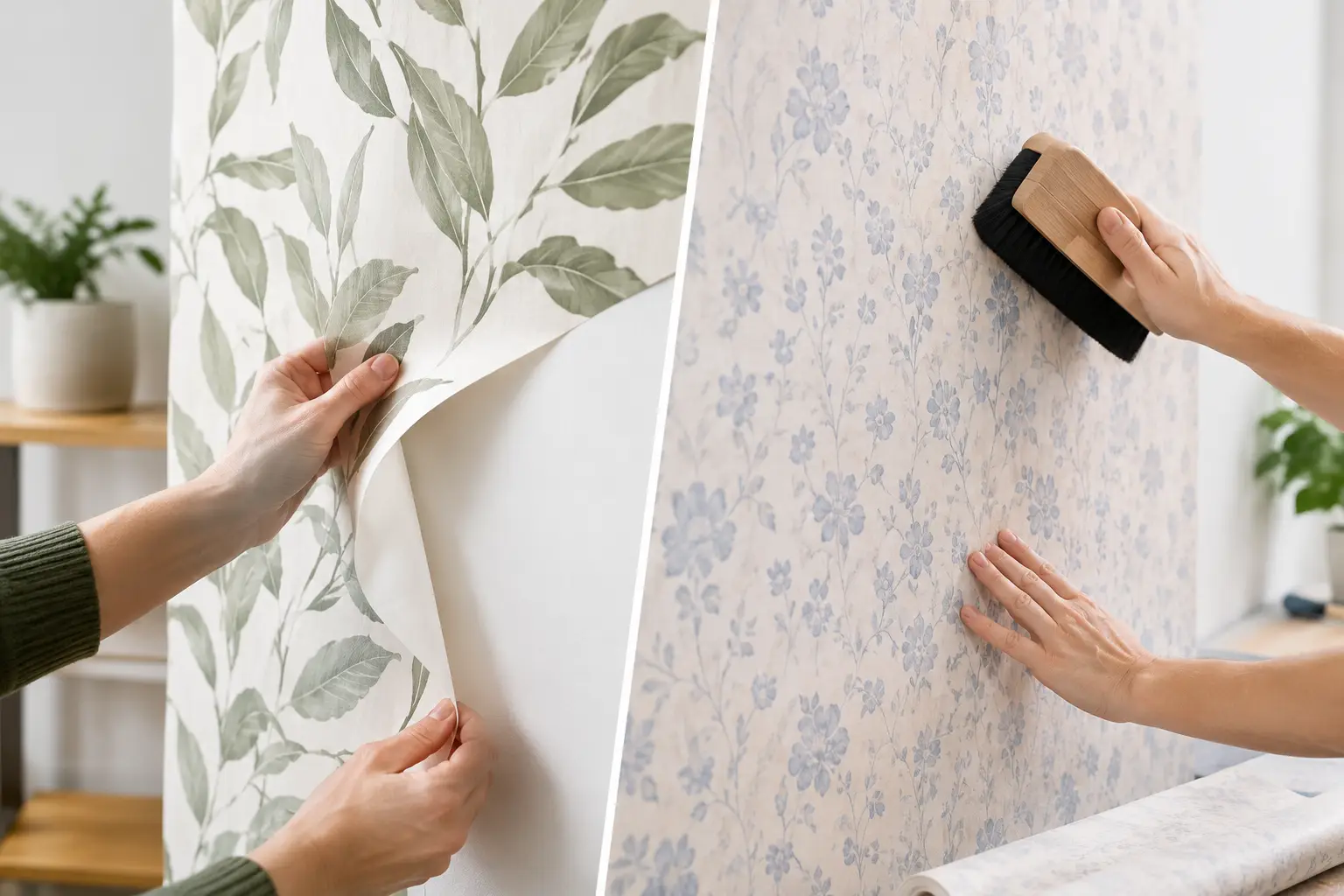
A wall covering can change the entire mood of a room, but the installation method affects more than the weekend project itself. When comparing removable versus paste wallpaper, the real question is not which option is universally better. It is which material, wall condition, design goal, and timeline fit your space. A renter refreshing one accent wall has different priorities than a homeowner finishing a nursery, and both have different needs from a designer specifying a hotel lobby.
What separates removable and paste wallpaper?
Removable wallpaper is most often a peel-and-stick product. It has an adhesive backing, so it applies directly to a clean, properly prepared wall without a separate paste. Many removable wall coverings are printed on vinyl or a similar flexible film, giving them a smooth, durable surface that is especially well suited to crisp photography, detailed murals, maps, and bold graphic designs.
Paste wallpaper is the traditional category. Depending on the product, paste may be applied to the paper itself, the wall, or activated with water. It comes in a broad range of materials, including paper, nonwoven wallpaper, grasscloth, fabric-backed vinyl, and heavily textured finishes. Its installation is more involved, but its material variety is one of its greatest advantages.
The word “removable” deserves a little care. It describes the intended removal process, not a guarantee that every wall will be unaffected under every condition. Fresh paint, weak paint, unprimed drywall, textured surfaces, humidity, and improper installation can all change the result. The same is true at the other end of the comparison: paste wallpaper can be removable too, especially modern strippable nonwoven products. Always judge the specific product and the wall beneath it rather than relying on the category name alone.
Removable versus paste wallpaper for real rooms
For a painted drywall accent wall, a peel-and-stick mural can be a practical, design-forward choice. There is no paste to mix, no soaking time, and no wet material expanding before it is hung. Panels can be aligned one at a time, which makes the process feel more manageable for homeowners who are comfortable measuring carefully and working slowly with a second person.
This is particularly useful when the visual is the main event. A forest scene behind a bed, a panoramic beach in a home office, or a child’s favorite animal artwork can be produced at the dimensions of the wall rather than forced into repeating wallpaper drops. Adhesive vinyl also has a polished, smooth finish that lets high-resolution images and saturated colors read clearly across a large surface.
Paste wallpaper often makes more sense when texture is central to the room concept. If you want the irregular weave of grasscloth, the softness of a textile finish, an embossed pattern, or a classic printed paper, traditional wallpaper offers options that adhesive films do not try to imitate. It is also a strong choice for permanent renovations where a professional installer is already involved and the wallcovering is expected to stay in place for many years.
Neither option is automatically better for a high-traffic area. A quality adhesive vinyl wall covering can resist scuffs well, while commercial-grade pasted vinyl can be exceptionally durable. The better choice depends on the product specifications, maintenance needs, and wall substrate. In a busy hallway, reception area, or children’s space, consider how easily the surface can be wiped, how likely it is to be bumped, and whether the design may need updating later.
Wall preparation matters more than the label
A flawless mural or wallpaper installation starts before the first panel goes up. Adhesive-backed materials need a clean, dry, smooth, fully cured surface. Dust, oils, old adhesive, and loose paint reduce adhesion. New paint needs adequate curing time according to the paint manufacturer’s guidance, because a wall that feels dry may still be releasing moisture or not fully bonded to the drywall.
Paint sheen also matters. A sound, smooth painted wall is usually the most predictable surface. Very flat or chalky paint can release powder, while heavily textured walls create air gaps and make seams more visible. Peel-and-stick products may struggle to make consistent contact over orange peel, knockdown texture, brick, or plaster with pronounced variation.
Paste wallpaper is not a shortcut around poor wall conditions. Texture may telegraph through thin papers, stains can show through light-colored coverings, and damaged drywall may require patching and priming first. However, some heavier pasted wallcoverings are more forgiving visually than a smooth adhesive mural. If you are unsure how a finish will behave, order or request a sample when available and test a discreet area.
For custom wall murals, accurate measurements are equally important. Measure the wall width and height in several places, because few walls are perfectly square. Account for sloped ceilings, baseboards, windows, doors, outlets, and architectural features before ordering. A made-to-measure mural should include enough material for proper positioning and trimming, while the artwork itself should be planned around the most important focal points.
Installation effort and correction time
Peel-and-stick wallpaper has a reputation for being easy, but “easy” does not mean careless. Large panels can fold onto themselves or drift out of alignment if they are pulled too quickly. The best installations use a clean workspace, a level reference line, a squeegee, a sharp trimming blade, and two people for wider panels. Begin at the top, remove the release liner gradually, and smooth from the center outward to limit trapped air.
The advantage is that minor positioning adjustments can often be made during installation. That can lower the stress of a first project, especially on a single feature wall. Still, repeated lifting can affect adhesion, and stretching the material to force a match can distort the image or create tension at the seams.
Pasted wallpaper calls for a different kind of discipline. You need to manage paste coverage, booking or relaxation time where required, pattern matching, and cleanup before paste dries. It can be a rewarding DIY project for someone familiar with wallcovering, but large-scale patterns and high-value materials are often best handled by an experienced installer. That added labor should be part of the budget from the beginning, not an afterthought.
Design flexibility, permanence, and cost
Removable wall coverings are appealing to renters, frequent redecorators, and anyone who wants a major visual change without treating it as permanent. They also work beautifully for temporary commercial displays, seasonal installations, photo backdrops, and staged properties. The ability to update a wall later is part of their value, even when the upfront material cost is not the lowest option.
Paste wallpaper can offer a longer-term, layered look. It is often chosen for formal dining rooms, historic homes, powder rooms, boutique retail interiors, and other spaces where material character matters as much as the printed image. Some specialty papers require more maintenance and can be harder to replace if the original dye lot is no longer available, but their finish can bring depth that a flat printed surface cannot replicate.
For image-based décor, quality should guide the decision as much as installation method. A low-resolution phone image may look fine on a screen but become soft or pixelated when enlarged to wall scale. Murale Design reviews customer-supplied artwork before production and can help assess whether an image is suitable for the requested dimensions. This is especially valuable for personal photos, branded commercial graphics, and large murals where the final print reveals every detail.
Choose based on the project, not the trend
Choose removable wallpaper when you want a smooth, image-rich statement wall, a cleaner dry installation process, or greater flexibility to change the room later. It is a natural fit for painted drywall that is clean, smooth, and in good condition.
Choose paste wallpaper when your design depends on authentic texture, you are making a long-term renovation decision, or you are working with a professional installer and a wallcovering specified for demanding conditions. Modern strippable options can also offer a useful middle ground for homeowners who want a traditional finish without committing to difficult future removal.
Before ordering either option, inspect the wall honestly, measure twice, and consider how the room will live after installation. The right wall covering is the one that supports the image or texture you love while fitting the surface, budget, and future plans for the space.
