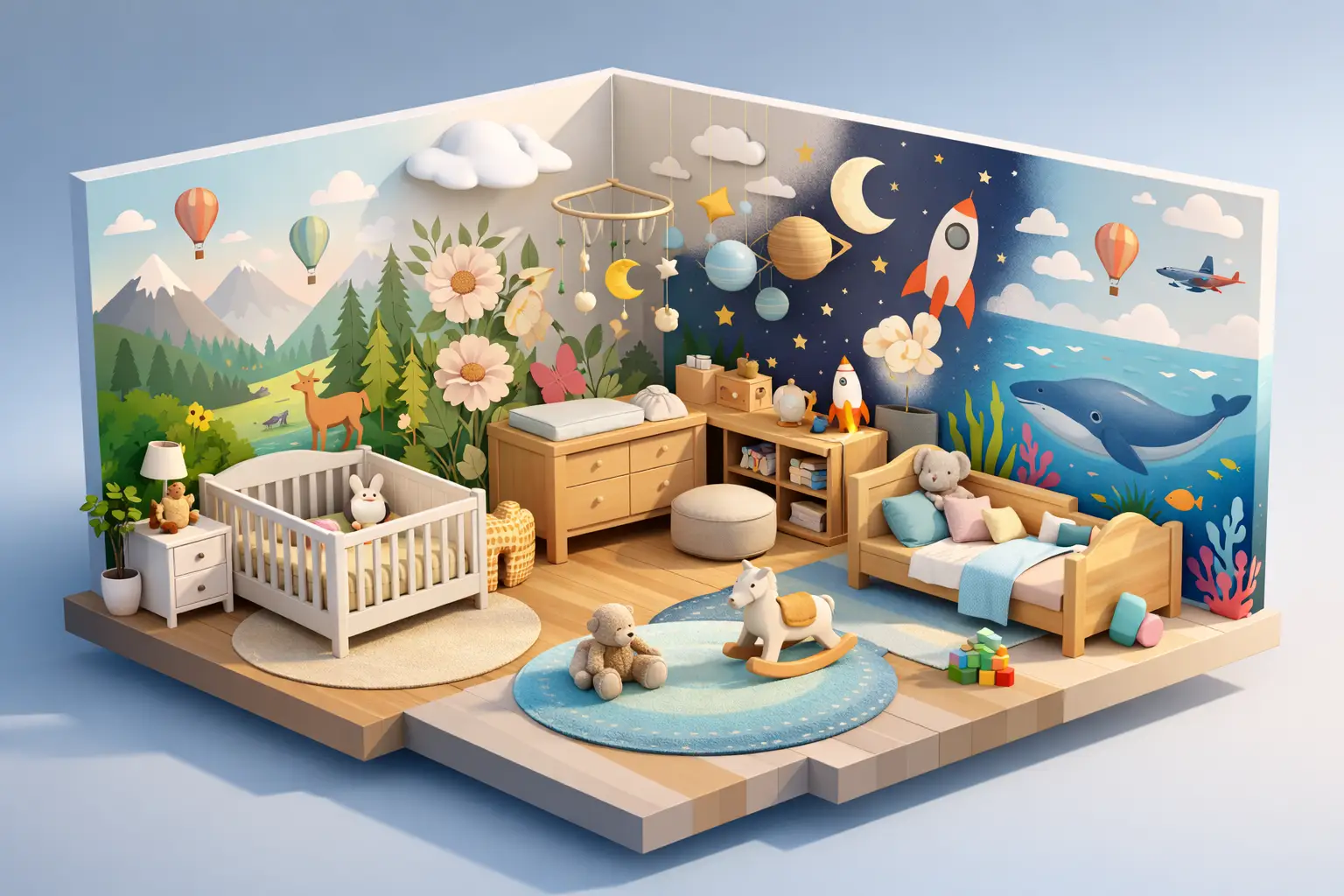
A nursery changes quickly: first it holds a crib, rocker, and midnight-feed essentials; before long, it needs floor space for books, toys, and a growing child's point of view. The best nursery wall mural ideas account for both moments. Rather than treating the mural as a temporary backdrop, choose a scene that gives the room personality now and remains inviting as the furniture and routines change.
A room-scale mural can do more than fill an empty wall. It can establish a calming color palette, make a compact nursery feel more expansive, or turn a simple wall into the visual anchor for the entire room. The key is matching the subject, scale, and material to the way the room will actually be used.
Start With the Wall, Not Just the Theme
Before choosing a woodland scene or a field of flowers, identify the wall with the clearest sightline. In many nurseries, that is the wall behind the crib, opposite the crib, or beside a reading chair. A mural behind the crib creates an immediate focal point, but a mural opposite it may offer more for a baby to notice during awake time. Either approach works if the composition is planned around the furniture.
Measure the full wall width and height, including baseboards, windows, doors, sloped ceilings, and closets. Large-format artwork should be sized to the finished wall area, not guessed from a standard room dimension. This is especially important with scenic designs: cropping a mountain peak, animal face, or horizon in the wrong place can change the effect entirely.
Also consider how the mural will meet the rest of the room. If a crib is centered on the wall, a centered composition can feel intentional. If a changing table or bookcase will cover one side, choose a design with softer background detail in that area. A custom-size mural wallpaper allows the visual focal point to stay visible rather than disappear behind furniture.
Nursery Wall Mural Ideas for Different Moods
1. A quiet woodland with layered trees
Forest murals are a lasting choice because they can be whimsical without feeling overly babyish. Look for misty pines, gentle birch trunks, or a soft illustrated canopy in sage, warm gray, muted blue, and cream. Small animals can add charm, but the trees should carry the composition so the design still works when a toddler's interests change.
This approach is particularly helpful for a narrow room. Vertical trunks pull the eye upward and give a low ceiling more presence. For a softer result, choose a forest with open sky or a pale ground rather than a dark, densely shaded scene.
2. Watercolor animals with breathing room
A single elephant, fox, bear, bunny, or giraffe can feel more refined than a wall crowded with characters. Watercolor-style animal murals bring gentle color variation and hand-painted warmth without competing with patterned bedding, woven baskets, or colorful books.
Scale matters here. One large animal can be delightful on a broad feature wall, while a collection of smaller animals may suit a smaller nursery. Avoid placing a character's face directly behind the tallest point of the crib if it will be mostly blocked. A side-facing animal or a scene with foliage around the edges often gives more flexibility.
3. Dreamy clouds and a soft sky
Cloud murals are an easy fit for families who want a peaceful nursery but do not want a theme that will date quickly. Pale blue, warm white, blush, lavender, or sun-washed neutral skies can make a room feel open, especially when natural light is limited.
A sky design pairs well with simple wood furniture and textured textiles. It can also work on a ceiling if the surface is smooth, accessible, and properly prepared, though wall installation is usually the more straightforward project. Choose gentle contrast rather than bright, sharply defined clouds if the goal is a restful space.
4. A botanical garden that outlasts the baby stage
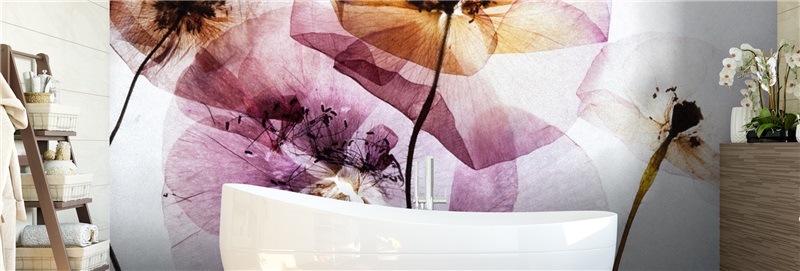
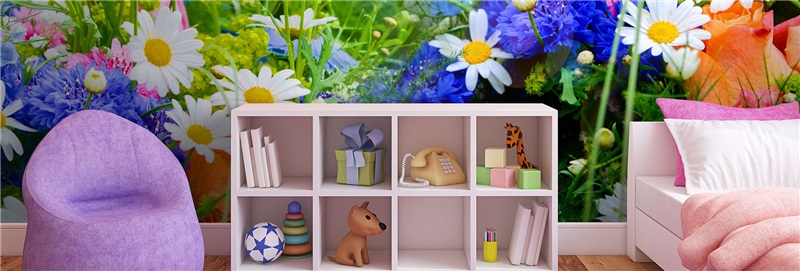
Botanical nursery murals offer a polished alternative to traditional juvenile motifs. Oversized leaves, meadow flowers, climbing vines, or soft branches can create a nature-inspired room that transitions easily into a child's bedroom. A floral mural in muted green, terracotta, dusty rose, or deep blue can be especially effective when the rest of the room stays simple.
The trade-off is visual density. A large, high-contrast botanical print may feel busy in a small room with open shelving and many toys. If the nursery already has plenty of activity, use a design with an airy background and place the strongest foliage toward the perimeter.
5. A moon, stars, and distant planets
Celestial themes give a nursery a sense of wonder without requiring cartoon styling. A pale night sky with stars and a crescent moon feels calm; a solar-system mural can become more educational as a child grows. For a sophisticated version, choose ink blue, charcoal, cream, and muted gold tones instead of neon planets or highly saturated black backgrounds.
Dark murals can be beautiful, but they absorb light. They tend to work best on one wall in a room with adequate daylight, light-colored trim, and balanced lighting for nighttime care. In a very small or dim nursery, a light-background constellation pattern may provide the same theme with less visual weight.
6. A map made for future stories
World maps, continents, and illustrated travel scenes can become a familiar point of conversation during reading time. They are especially useful for parents who prefer décor with a learning element. A map with animals, landmarks, or understated geographic detail offers different things to notice over time.
Be realistic about the room's style. A highly detailed map can compete with other wall décor, while a more minimal map works with a modern nursery. Make sure text remains readable at the intended print size, particularly if a custom file is being used.
7. A storybook-inspired landscape
Rolling hills, cottages, sailboats, hot-air balloons, and gentle village scenes create narrative without locking the room into a specific licensed character. This is a smart route when you want a playful space that still feels personal and original.
Choose a landscape with a clear horizon line and leave enough visual calm around it. When furniture covers the lower third of the wall, the scene should still make sense above the crib or dresser. A professionally reviewed layout can help position key elements before the mural is printed.
8. Underwater life in restrained color
Ocean murals can range from quiet and coastal to bright and energetic. For a nursery, soft waves, watercolor sea creatures, coral silhouettes, or a single whale drifting through a pale blue scene are often easier to live with than a densely illustrated reef.
This theme works beautifully with natural oak, white, and sandy neutral finishes. If you are using navy accents, repeat that color in only a few places, such as a curtain edge or storage bin, so the room feels coordinated rather than themed from corner to corner.
9. A family photo turned into a landscape mural
A favorite travel photo, a shoreline, a mountain view, or an image from a meaningful family place can make the nursery deeply personal. It is also an option for parents who do not want conventional children's décor. Not every photo will enlarge well, however. A phone image that looks crisp on screen may not have enough resolution for a full wall.
For custom-image projects, ask for image-quality review before production. The original file, not a screenshot or social-media download, gives the best chance of a clear print. Murale Design can evaluate supplied artwork and help determine whether the image is suitable for the wall dimensions you have in mind.
10. Abstract shapes in a flexible palette
An abstract mural is often the most adaptable choice for a renter, design-minded parent, or anyone building a nursery around color rather than a character theme. Arches, brushstrokes, soft geometrics, or layered organic forms can bring energy while leaving room for changing bedding, artwork, and toys.
Use a palette drawn from two or three existing elements in the room. For example, warm beige walls, a walnut crib, and a rust-colored chair may call for sand, clay, cream, and muted blue. A controlled palette will feel considered even when the mural itself is playful.
11. A cityscape with local meaning
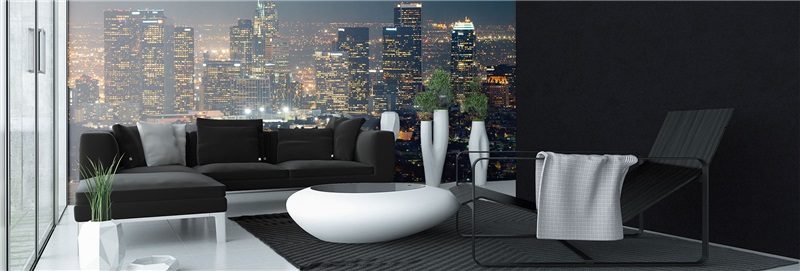
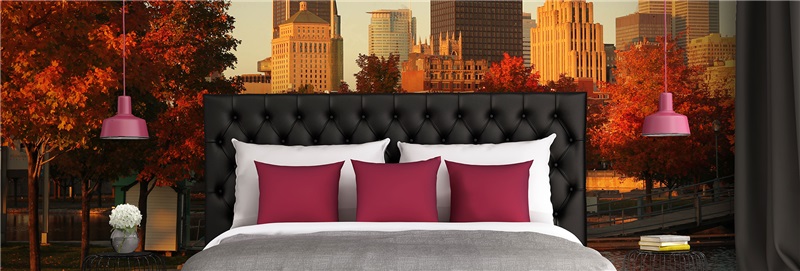
A simplified skyline, neighborhood illustration, or iconic streetscape can be a wonderful choice for urban families. It creates a sense of place and can feel more personal than a generic theme. Keep the treatment light and graphic rather than hyper-detailed if the room is small.
City murals tend to suit a more modern nursery, especially alongside black, white, natural wood, and one accent color. If the skyline has many fine lines, order it at a scale that preserves those details rather than shrinking the design into a narrow wall.
12. A mural built around a favorite color
Sometimes the strongest idea is not a subject at all. A tonal mural in sage, soft blue, peach, or warm neutral can establish atmosphere while allowing the room's books, textiles, and furniture to do the storytelling. Subtle hills, line art, or faint texture add dimension without demanding attention.
This is an excellent option when the nursery has limited wall space or when you expect the room to change often. It offers a finished, designed look while making future updates much easier.
Choose Materials and Installation With Real Life in Mind
A nursery mural should be selected for appearance and practical performance. Smooth, painted drywall is generally the best surface for adhesive vinyl mural wallpaper. Fresh paint needs adequate curing time, and walls should be clean, dry, smooth, and free of dust before installation. Textured surfaces, peeling paint, or moisture issues can affect adhesion and the finished look.
For a made-to-order mural, confirm the final dimensions before printing and review the proof or layout carefully. Check where panels will meet, where windows interrupt the image, and whether important details land behind furniture. Durable latex inks and an anti-scratch finish are useful features in a room where walls may eventually encounter curious hands, toys, and everyday cleaning.
If the installation feels intimidating, do not treat it as an afterthought. Read the preparation instructions, gather the recommended tools, and work slowly with a second person on larger panels. Professional installation can be worthwhile for oversized walls, complicated cuts, or projects where perfect alignment matters.
The most successful nursery mural is not the loudest design in the room. It is the one that feels good at 2 a.m., gives the space a point of view in daylight, and still has something to offer when your child starts making the room their own.
![Best Bathroom Mural Ideas to Elevate the Room [even for small bathroom]](/assets/documents/article/image/sans-titre.jpg)