A blank wall above a sofa, bed, or reception desk can make an otherwise finished room feel unfinished. The right piece of oversized art changes the room’s sense of scale, color, and personality in one decision. This large wall art buying guide will help you choose artwork that looks intentional from across the room and holds up to the practical demands of a real installation.
Large-format décor is not simply small art printed bigger. A room-scale image needs enough visual depth, the right proportions, and a material that suits the wall and the way the space is used. Whether you are choosing a ready-made design, a canvas print, a tapestry, or a custom mural created from your own image, start with the wall rather than the artwork.
Start With the Wall, Not the Artwork
Measure the usable wall area before browsing. That means the open space after accounting for furniture, windows, molding, light switches, vents, and door swings. A large piece should have visual breathing room. When art is pressed too close to a ceiling line, lamp, or side wall, even a beautiful image can feel crowded.
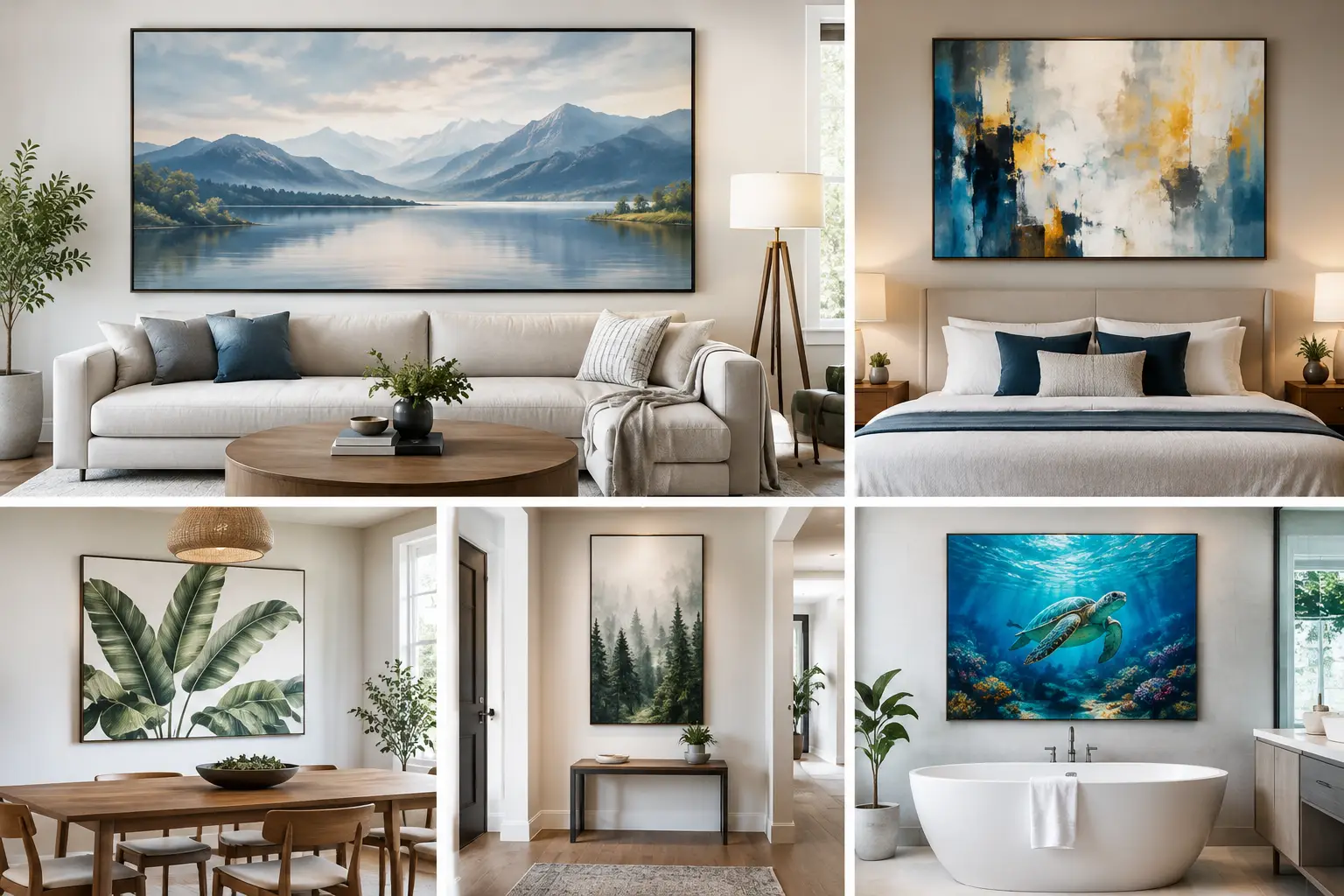
For art above furniture, a useful starting point is to make the artwork about two-thirds to three-quarters the width of the piece below it. Above an 84-inch sofa, for example, art between roughly 56 and 63 inches wide usually feels balanced. This is a guideline, not a rule. A low, wide abstract can stretch farther, while a tall portrait-oriented image may work better as a vertical focal point.
Height matters just as much. If you are hanging framed canvas or a tapestry, keep the visual center near eye level, typically around 57 to 60 inches from the floor in a home. Over a headboard or sofa, the bottom edge can sit closer to the furniture, often 6 to 10 inches above it. Wall murals work differently because they are designed to occupy a broader field of view. They can run from baseboard to ceiling, turn an alcove into a destination, or cover a full feature wall.
Painter’s tape is one of the best buying tools available. Tape out the proposed width and height directly on the wall, then view it from the doorway and the main seating position. You will quickly see whether the scale feels generous or merely adequate.
Choose a Format That Matches the Room
The best format depends on the visual effect you want and how permanent you want the change to feel. Large canvas prints provide a familiar art-gallery presence and suit spaces where a single image needs a defined edge. They work well over a console, in a bedroom, or as a focal piece in a hallway.
Tapestries add softness. Their textile surface can help counterbalance rooms with hard flooring, glass, metal, and clean-lined furniture. They are especially appealing in bedrooms, dorm-style spaces, creative studios, and relaxed bohemian interiors. They also make sense for renters who want a bold visual layer without committing to a wall-covering installation.
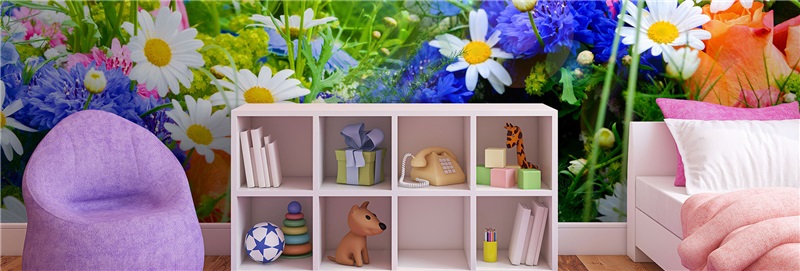
A custom adhesive wall mural creates the most immersive result. Instead of treating the wall as a place to hang art, it turns the wall itself into the artwork. Forest scenes can add depth to a narrow bedroom; a misty beach can calm a wellness room; a world map can give a home office or classroom a clear point of view. For commercial interiors, murals also offer visual consistency across larger client-facing spaces.
There is a trade-off. A mural has more visual impact, but it asks more of the wall preparation and installation process. A canvas is easier to reposition or replace, but it leaves more of the wall exposed. Consider how often you refresh your décor, how much texture the room needs, and whether the image should feel like a statement piece or a complete environment.
Use the Right Image for Large-Format Printing
An image that looks sharp on a phone can look soft when enlarged to cover a wall. Resolution is part of the buying decision, especially when you are uploading a personal photo. Files from a modern camera or a high-quality original photograph often perform well, while screenshots, images downloaded from social media, and heavily compressed files may not.
Image quality is not only about pixel count. Lighting, focus, cropping, and subject matter all affect the final result. A close-up family portrait may be technically sharp but feel overwhelming at 8 feet wide. A landscape with a distant horizon, layered texture, or open sky generally scales more naturally. Architectural photography, botanical details, maps, and abstract artwork can also perform beautifully at large sizes because they retain interest from both near and far away.
Pay attention to the crop. A panoramic image may suit a wide wall but leave too little content for a tall mural. A vertical portrait can be ideal beside a staircase or in a narrow entryway. If the proportions of your wall and source image do not match, some cropping is usually necessary. The question is whether the focal point remains intact after the crop.
For a custom project, having a design team review the file before production removes much of the guesswork. At Murale Design, image review and design assistance help customers assess whether their photo is suitable for the requested dimensions and whether an adjustment to the crop or scale would improve the result.
Let Color Set the Mood Without Overmatching
Large art has enough visual weight to lead a room. You do not need to match every color in the image to a pillow, rug, or accessory. In fact, overly coordinated rooms often feel less natural than spaces with a controlled contrast.
Choose one or two colors from the artwork that can reappear elsewhere in the room. A coastal mural might echo the blue-gray of a throw and the warmth of a wood table. A floral canvas could pull a muted green into the curtains or a soft blush into the bedding. Let the remaining colors do their own work.
Consider the light, too. North-facing rooms tend to receive cooler daylight and may benefit from warm landscapes, soft neutrals, or sunlit botanicals. Bright south-facing rooms can carry deeper blues, dark forests, or high-contrast cityscapes. In a small room, a pale image with a visible horizon or sense of distance can make the wall feel more open. Dark art is not off limits, but it works best when balanced by adequate lighting and lighter surrounding surfaces.
Check the Material and Wall Conditions
A successful large-wall installation begins with a clean, sound surface. For adhesive vinyl murals, painted drywall is generally the preferred application surface. The wall should be smooth, dry, dust-free, and fully cured if it has been recently painted. Fresh paint can release moisture or continue off-gassing, which may interfere with adhesion.
Textured walls require extra attention. Light orange-peel texture may be workable in some cases, but pronounced texture can show through the graphic and reduce contact with the adhesive. Peeling paint, flaking drywall, active moisture issues, or dusty plaster should be repaired before ordering. A mural can transform a wall, but it cannot correct the condition underneath it.
Material quality affects the finished appearance and the experience of living with the piece. Durable adhesive vinyl printed with latex inks offers rich color without the strong solvent odor associated with some printing methods. An anti-scratch finish is particularly useful in busy areas such as kids’ rooms, hallways, retail spaces, and offices, where walls are more likely to be touched or brushed.
If your mural arrives in panels, review the panel plan before installation. Panels make large-format production and handling more manageable, but careful alignment is essential. Working slowly, starting from a level vertical reference line, and smoothing as you go will give the image its cleanest finish. Larger projects, high walls, and commercial installations may justify professional installation support.
Think About Viewing Distance and Daily Life
The image should work at the distance from which people will actually see it. A detailed world map invites closer viewing in an office or study. A sweeping forest scene reads well from across a living room. In a restaurant, hotel, or waiting area, a mural needs enough presence to register quickly without becoming visually tiring for guests and staff.
Also consider what happens around the art every day. A wall behind a dining table may need a design that is forgiving of occasional marks. A nursery benefits from calming colors and imagery that remains appealing as a child grows. Behind a television, a low-contrast mural or abstract pattern can be easier on the eyes than a highly detailed image competing with the screen.
Large wall art is a purchase worth measuring twice, but it should not feel intimidating. Once you have the wall dimensions, a clear idea of the room’s mood, and a suitable image or design direction, the technical decisions become much easier. Choose the piece that makes you want to pause at the doorway and look at the room one more time.