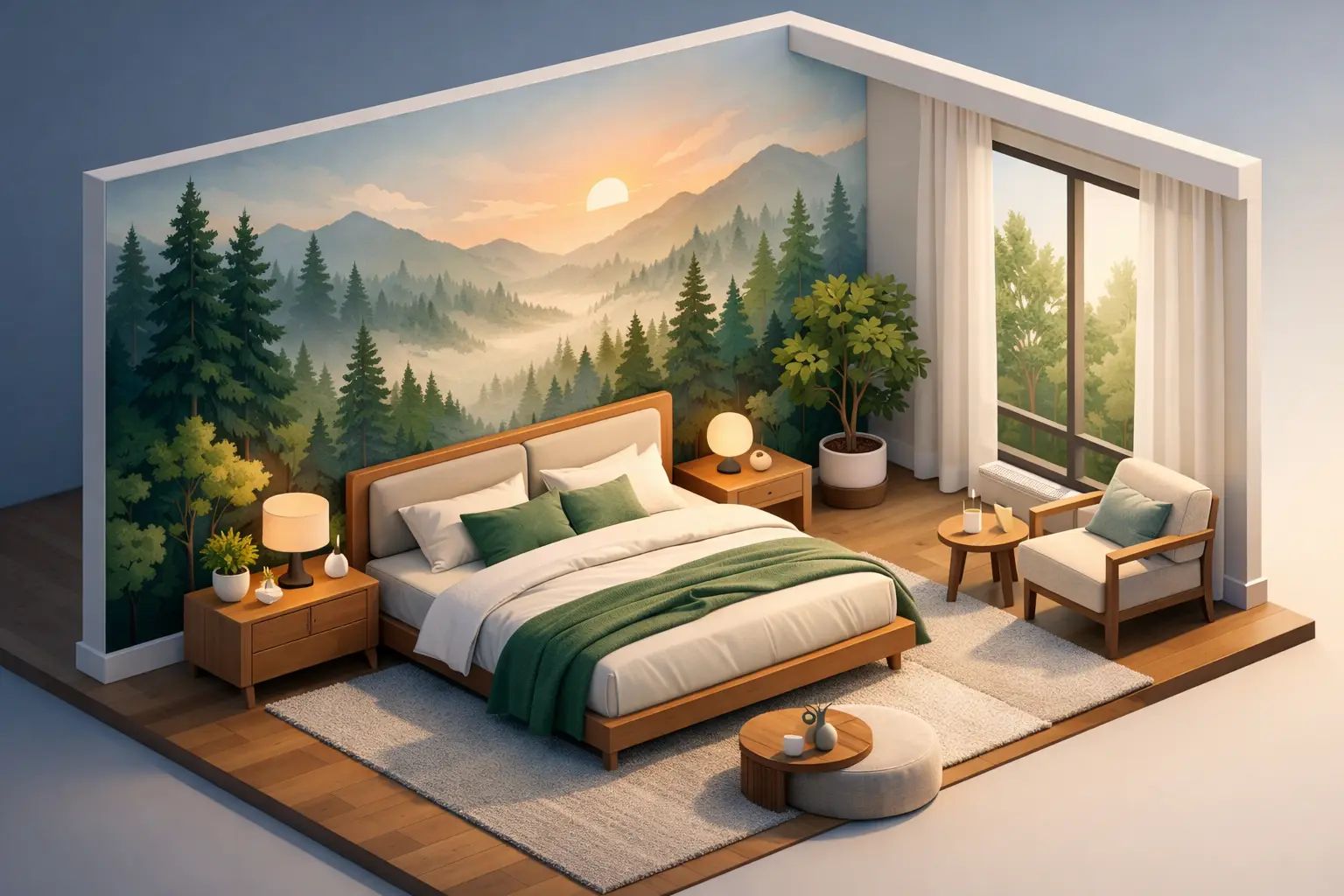
A bedroom should not feel like another screen-filled room at the end of a long day. A forest wall mural bedroom creates a stronger sense of retreat by giving the eye one expansive, natural view instead of a collection of smaller decorative pieces. The effect can be quiet and misty, richly wooded, sunlit, or graphic and modern. What makes it successful is not simply choosing a beautiful forest image. It is choosing one that works with the bed, the room’s light, and the wall itself.
Why a Forest Scene Belongs Behind the Bed
The wall behind the headboard is often the most natural place for a mural. It is visible on entry, frames the bed as the room’s focal point, and does not have to compete with wardrobes, windows, or frequent wall use. A forest scene adds depth where a solid paint color can feel flat, particularly in a small bedroom with limited space for furniture or art.
Nature imagery also brings a useful kind of visual order. Tall tree trunks lead the eye upward, which can make standard ceiling heights feel more generous. A path through the woods suggests distance, while layers of foliage create dimension. For a bedroom, that sense of depth is usually more restful than a high-contrast geometric pattern or a busy city view.
Still, “forest” is a broad category. A dark evergreen landscape can feel cocooning in a bright, spacious room, but it may overwhelm a bedroom with little natural light. A pale birch grove, foggy woodland, or soft green canopy often gives smaller or north-facing rooms the same natural character with a lighter result.
Choose the Forest Mood Before the Image
Start with the emotional tone you want from the room. This decision makes image selection more precise and helps the mural work with bedding, lighting, and existing finishes rather than becoming an isolated feature.
For a calm, airy bedroom
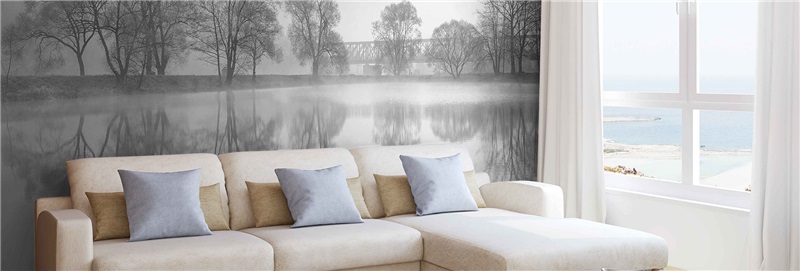
Look for misty forests, softly focused trees, pale birch trunks, or distant woodland in muted sage, gray-green, warm beige, and soft blue. These scenes pair well with linen bedding, light oak, cream rugs, and brushed-metal lighting. They also leave room for texture in the rest of the space, such as a woven throw or upholstered headboard.
For a warm, enveloping room
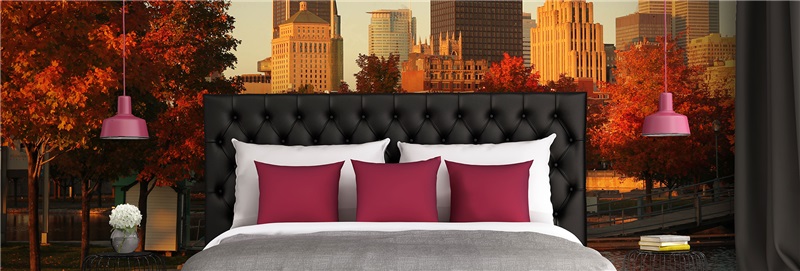
Choose deeper pine woods, autumn foliage, shadowed trails, or a forest at golden hour. These images can make a large bedroom feel more intimate and visually grounded. Balance them with warmer lamps, natural wood, and lighter bedding so the wall remains dramatic without making the room feel heavy.
For a cleaner, more contemporary look
A black-and-white forest photograph, a simplified tree silhouette, or a graphic woodland illustration can be a better fit than a highly detailed landscape. This direction works particularly well with streamlined furniture and a restrained palette. The trade-off is that a graphic mural makes a clearer style statement, so it is worth choosing a design you will be happy to live with beyond one seasonal trend.
If you already have patterned bedding, an ornate rug, or colorful art elsewhere in the room, favor a forest image with a limited palette and an uncluttered composition. When the mural is the room-scale art piece, it does not need extra competition.
Plan Scale for a Forest Wall Mural Bedroom
A mural is most convincing when its scale matches the architecture. Tiny trees enlarged across a wall can look blurry or strangely oversized, while a wide landscape cropped too tightly may lose the depth that made it appealing. Measure the full installation area first, including any space above the headboard and along the baseboard. Then consider which parts of the image can be cropped without sacrificing the scene.
Place the most important visual detail where it will remain visible. If the bed covers the lower third of the wall, a winding path, a deer, or a distinctive cluster of trees should not sit directly behind it. A design with open ground near the bottom and more visual interest at mid-wall and above often works especially well behind a bed.
Tree placement matters, too. Vertical trunks can look striking when they rise around the headboard rather than appearing to grow out of it. Before ordering, use painter’s tape to mark the planned mural width and height on the wall. This simple step reveals whether the design should extend past the nightstands, stop at their outer edges, or cover the complete wall.
For an accent wall, a mural that reaches from baseboard to ceiling generally feels more intentional than one that floats with a painted border around it. A full-wall application also lets the forest scene create its natural sense of immersion. If the room has sloped ceilings, a large window, or unusual cutouts, custom sizing becomes especially valuable because the composition can be planned around those conditions.
Coordinate Color Without Matching Everything
A forest mural does not require a bedroom full of green accessories. In fact, too much literal color matching can make the finished room feel themed rather than designed. Pull one or two quiet tones from the mural - perhaps moss, bark brown, stone gray, or foggy blue - and repeat them in textiles or a painted furniture piece.
Keep larger surfaces calmer. White, oatmeal, taupe, charcoal, and natural wood are useful partners for woodland imagery because they let the mural retain its visual depth. A terracotta pillow, rust-colored blanket, or brass reading lamp can add warmth to a green forest scene without needing to appear in the print itself.
Pay attention to lighting before committing to a very dark image. Daylight shows the mural’s detail, while bedside lamps will emphasize its darkest areas at night. Layered lighting is helpful: overhead illumination for general use, bedside lights for reading, and a dimmable option for a softer evening atmosphere. In a low-light room, a forest design with mist, sky, or open space prevents the wall from reading as one dark block.
Prepare the Wall for a Clean Result
The image gets the attention, but the wall preparation determines how polished the installation will look. Adhesive vinyl mural material needs a clean, dry, smooth painted drywall surface. Repair holes and cracks, remove dust and residue, and make sure fresh paint has fully cured according to the paint manufacturer’s guidance before installation.
Texture deserves special consideration. Heavy texture, loose paint, peeling finishes, or walls with moisture issues can affect adhesion and make panel seams more visible. A smoother surface gives the mural the best chance to sit flat and maintain its intended appearance. Renters should also check their lease and speak with the property owner before making any wall-covering changes.
At Murale Design, murals are made to the dimensions of the project and printed on adhesive vinyl with durable latex inks and an anti-scratch finish. That custom approach is useful when a room is not a standard rectangle or when you want the forest scene sized around a headboard, window, or architectural feature.
Use a Personal Forest Photo Carefully
A photo from a favorite hike, family cabin, or travel memory can make the bedroom far more personal than a catalog image. But a beautiful photo on a phone screen is not automatically suitable for a wall-size print. Resolution, sharpness, lighting, and the amount of detail in shadowed areas all become more noticeable when the image is enlarged.
Choose the original image file whenever possible, not a screenshot, social-media download, or compressed copy sent through a messaging app. Photos taken in bright but indirect light tend to retain more usable detail than images with very dark foregrounds and blown-out skies. If the image includes people or a landmark, think carefully about where it will fall once the mural is cropped around furniture.
Professional image review is worthwhile for a custom project. It can identify whether the file will print clearly at the requested dimensions and whether a crop will preserve the part of the photo that matters most. This is one of the practical differences between ordering a room-scale mural and simply enlarging a favorite snapshot.
Let the Mural Set the Pace of the Room
Once the forest is on the wall, resist the urge to fill every remaining surface. A few tactile layers - a soft rug, blackout curtains, one well-chosen bedside lamp, and bedding that feels good at the end of the day - will do more for the finished bedroom than additional wall décor.
The best forest mural is not necessarily the boldest one. It is the scene that makes the room feel like somewhere you want to return to, whether that means a sunlit trail, quiet birches in fog, or the familiar view from a place you love.
![Best Bathroom Mural Ideas to Elevate the Room [even for small bathroom]](/assets/documents/article/image/sans-titre.jpg)