
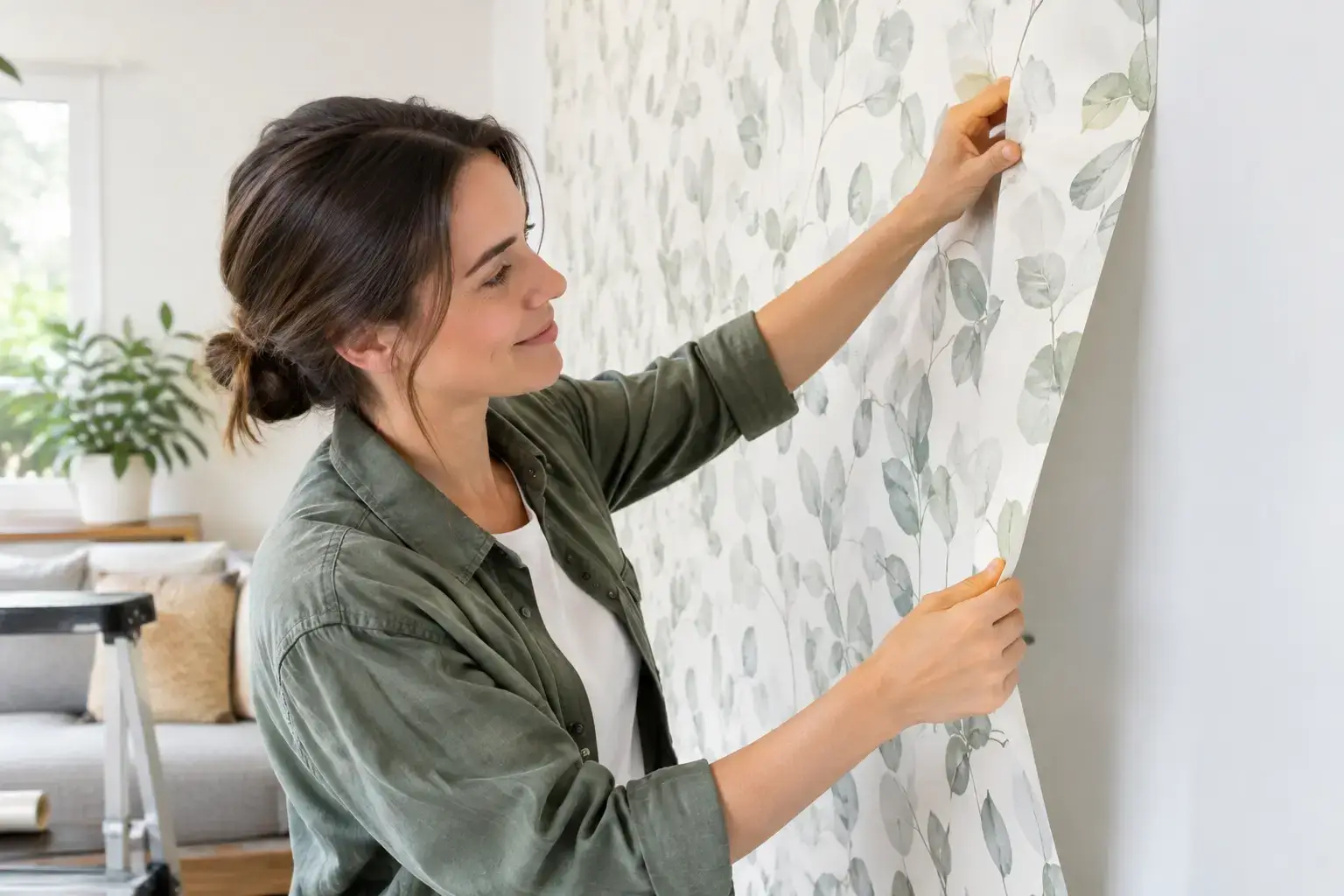
A feature wall can change the entire feel of a room, but few homeowners want a decorating decision that feels permanent. This removable wallpaper review looks at what actually determines whether peel-and-stick wall décor feels like a smart upgrade or a frustrating weekend project: the material, the wall beneath it, the print quality, and the care taken during installation.
For renters, first-time installers, and anyone planning a bedroom, nursery, office, or living-room refresh, removable wallpaper offers real creative freedom. It can turn a blank wall into a forest view, oversized floral composition, cityscape, custom photo, or quiet abstract backdrop without the mess of traditional paste. But “removable” is not the same as “works on every wall with no preparation.” The best results come from matching the product to the space.
A Removable Wallpaper Review Begins With the Material
Not all peel-and-stick wallpaper is made alike. Thin, low-cost papers can stretch, show wall texture, or lose alignment as panels are applied. A quality adhesive vinyl wall covering has more body, which makes it easier to handle and better able to create a smooth, finished surface over a properly prepared painted wall.
For a custom mural, print technology matters as much as the adhesive. Latex inks create rich color with a durable finish suited to interior use. An anti-scratch surface is especially useful in high-contact areas such as a hallway, child’s room, home office, retail setting, or waiting area. It helps the wall covering remain presentable after ordinary use, though it should not be treated like an indestructible surface.
The visual difference is most noticeable in large-scale artwork. Soft gradients in a beach sky, deep blacks in a city photograph, and fine details in a world map all reveal the limitations of poor printing. A well-produced mural should look intentional from across the room and retain convincing detail when viewed closer.
What “Removable” Really Means
The strongest benefit of removable wallpaper is flexibility. When it is installed on a suitable, fully cured painted drywall surface, adhesive vinyl can generally be removed with far less disruption than traditional pasted wallpaper. It is a practical choice for renters who have permission to personalize their space, homeowners who like to update rooms over time, and commercial teams creating temporary branded environments.
Still, removal depends on the condition of the wall. Fresh paint, weak paint, poorly bonded paint, textured surfaces, moisture damage, and walls with residue from cleaning products can all affect adhesion and removal. A wall covering cannot correct those underlying issues.
Paint removal is the concern people raise most often, and the honest answer is that no wallpaper can promise identical results on every painted surface. If the existing paint was not properly applied or has already begun to fail, any adhesive product may lift it. Walls painted recently need adequate cure time according to the paint manufacturer’s recommendation. In many cases, waiting several weeks is wiser than rushing to install a mural on paint that still feels dry but has not fully cured.
For a long-term installation, the adhesive needs a clean and stable surface. For a temporary project, it is still worth taking preparation seriously. The time spent cleaning and checking the wall is much less than the time required to correct panels that will not stay in place.
The Wall Surface Makes or Breaks the Result
Smooth, clean, painted drywall is the best candidate for peel-and-stick wallpaper. A satin, eggshell, or similar properly cured paint finish often provides a dependable surface, although individual paint formulas vary. Wipe the wall with a mild, non-residue cleaner, allow it to dry completely, and remove dust along baseboards and corners before beginning.
Heavy texture is less forgiving. Orange peel texture, knockdown finishes, brick, rough plaster, and uneven paneling may show through the design or reduce the adhesive’s contact with the wall. Even if the mural initially sticks, texture can create shadowing and make seams more visible. In these spaces, a smooth wall preparation step or a different wall-covering approach may be the better decision.
Bathrooms, kitchens, and other humid rooms require additional judgment. A mural can be a beautiful addition to a powder room or a dry area of a kitchen, but it should not be installed where it receives direct water exposure, frequent steam, or persistent condensation. Good ventilation and placement away from splash zones matter.
Custom Sizing Is a Major Advantage
Standard wallpaper rolls ask the customer to adapt the design to a fixed format. Custom mural wallpaper reverses that process. The artwork can be scaled to the wall’s dimensions, and the panels can be planned to make the composition feel balanced within the room.
That is particularly valuable for dramatic imagery. A mountain landscape should not lose its peak behind a door frame. A child’s name or favorite animal should not land across a seam. With a botanical design, the scale of leaves and blooms should work with the furniture below it rather than overpower a compact bedroom.
Accurate measurements are essential. Measure the wall width and height in more than one location, since older walls are not always perfectly square. Include a small margin for trimming rather than ordering to the tightest measurement. Note windows, outlets, built-ins, sloped ceilings, and vents before finalizing the layout.
When customers use a personal photograph, image quality deserves the same attention. A phone image may look excellent on a small screen yet become soft when enlarged to wall scale. At Murale Design, image review and design support can help determine whether a photo is suitable for large-format printing or whether cropping, adjustment, or another file would produce a stronger result.
Installation Is Manageable, Not Effortless
Peel-and-stick installation is straightforward in concept: position the panel, remove the backing gradually, smooth the material onto the wall, and align the next panel. The execution calls for patience. Large panels are easier to install with two people, especially when working above a bed, sofa, staircase, or desk.
Start with a true vertical reference line rather than trusting a corner. Many corners are slightly out of plumb, and starting crooked can cause every following panel to drift. Apply the first panel slowly from top to bottom, smoothing outward to reduce trapped air. Remove only part of the backing at a time so the material remains controlled.
If a panel is misaligned, carefully lifting and repositioning it early is preferable to forcing it into place. Excessive pulling can stretch some materials, while aggressive smoothing can create wrinkles. Use a wallpaper squeegee or soft applicator and work methodically. Trim only after the panel is fully positioned.
Panel seams deserve close attention. They should align cleanly without obvious gaps, but they should not be pressed or stretched so tightly that the design distorts. A made-to-order product with clear panel construction helps reduce uncertainty, especially on wide walls where pattern continuity is central to the finished look.
The Trade-Offs Worth Considering
Removable wallpaper is not always the lowest-cost way to cover a wall, particularly when compared with paint. Yet it can deliver visual complexity that paint cannot: a misty forest behind a bed, a large-scale floral in a dining room, a personalized sports design in a recreation space, or a branded backdrop in an office reception area.
It also asks more of the installer than hanging framed art. Preparation, measurements, alignment, and wall condition all affect the outcome. A small accent wall is a sensible first project for a homeowner who has never installed adhesive vinyl. A tall stairwell, a textured commercial wall, or a full-room application may justify installation support.
For design professionals, the benefits are consistency and customization. A mural can be specified to fit the architecture, coordinate with a palette, and carry a concept across multiple locations. The responsibility is making sure the wall conditions, final measurements, and artwork approval are handled before production.
Is Removable Wallpaper Worth It?
For the right wall and the right project, removable wallpaper is worth it because it creates a room-scale point of view without committing to traditional pasted wallpaper. It works especially well when the design is personal, the dimensions are specific, and the print is treated as a central part of the interior rather than a last-minute accessory.
The best purchase is not simply the boldest image. It is a design printed on an appropriate material, sized carefully for the wall, installed on a clean and stable surface, and chosen with enough confidence that you will enjoy seeing it every day. Start with the wall you want to transform, then let the artwork earn its place there.