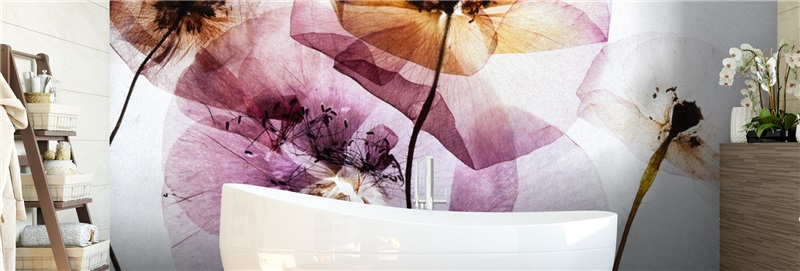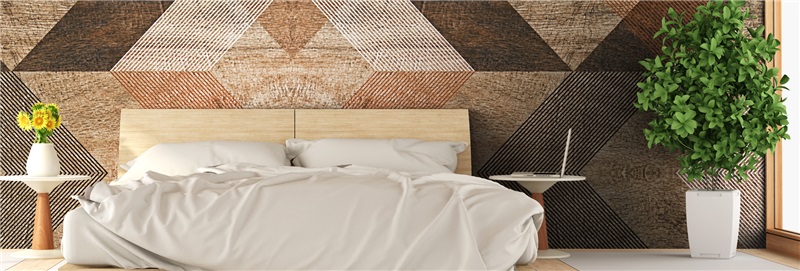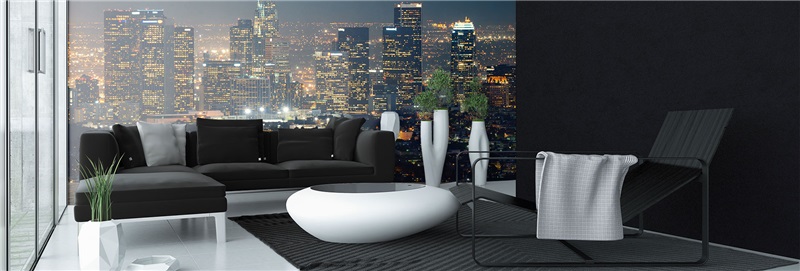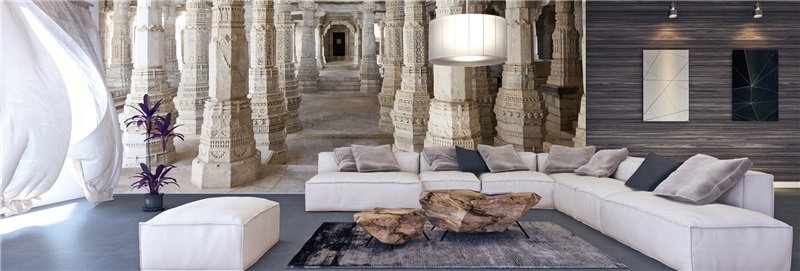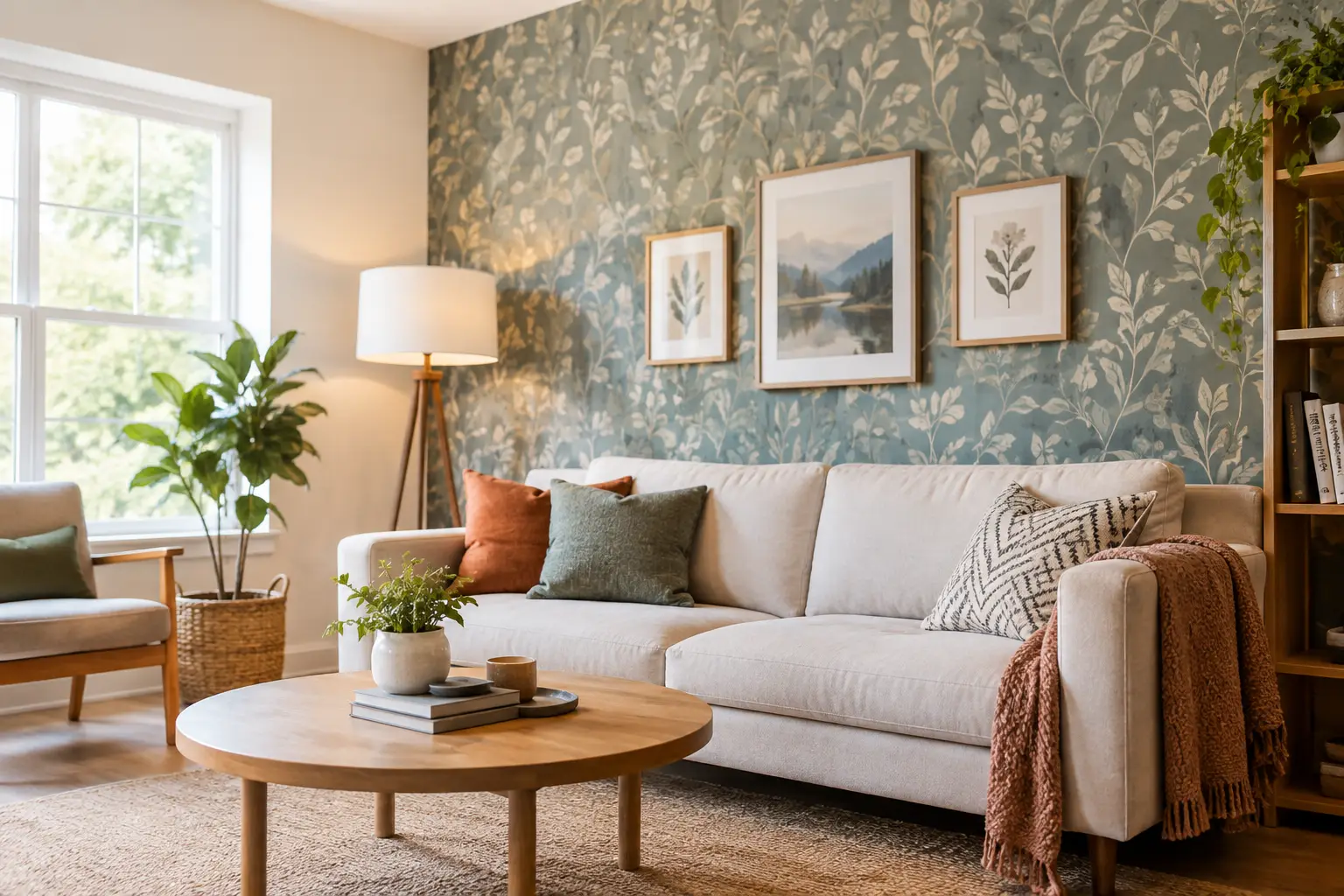
A rental should not have to feel like a waiting room. The best wallpaper for rental homes gives you a recognizable point of view without ignoring the realities of a lease, painted drywall, and a future move-out inspection. The right choice is less about finding the loudest pattern and more about choosing a wall, material, scale, and installation plan that suit both your home and your agreement.
For renters, wallpaper works best when it has a clear purpose. It might make a bedroom feel calmer, give a plain home office more presence on video calls, or turn a nursery corner into a place with real personality. A carefully selected mural or wallpaper-style wall covering can do more for a room than several small décor purchases, especially when the architecture itself is basic.
What Makes the Best Wallpaper for Rental Homes?
The most renter-conscious wallpaper is not automatically the product labeled “removable.” Paint condition, wall texture, humidity, how long the covering remains installed, and the adhesive itself all affect removal. A quality adhesive vinyl wall covering may be an excellent choice for a smooth, painted drywall feature wall, but renters should still test a small, hidden area and get written approval when their lease requires it.
Start by looking at the existing wall rather than the design catalog. Fresh, well-bonded paint on a clean, smooth wall is generally a better candidate than a wall with peeling paint, heavy orange-peel texture, moisture marks, or recent patchwork. If you are unsure whether the paint is stable, a framed canvas print or tapestry may be the lower-risk way to bring in large-scale color.
The best choice also fits the duration of your stay. If you expect to move within a year, a single accent wall is usually more sensible than treating an entire open-plan room. If this is a long-term rental and your landlord welcomes improvements, a custom mural can be a more rewarding investment in everyday comfort.
Begin With Permission, Measurements, and Wall Prep
Before ordering, read the lease language about alterations. Some landlords allow wallpaper with written notice. Others permit only products that can be removed without repainting, while some require the wall to be restored at move-out. A quick email with the product type, proposed wall, and a visual mockup can prevent a difficult conversation later.
Measure the wall’s full width and height in several places. Older apartments and rental houses are not always square, and a made-to-order wall covering should account for the largest measurement. Include areas above doors, around windows, and behind radiators only if you plan to cover them. It is easier to trim excess material during installation than to discover a short edge at the ceiling.
Preparation is not decorative busywork. Clean the wall gently to remove dust, cooking residue, or hand oils, then allow it to dry completely. Repair loose paint before proceeding. For newly painted walls, follow the paint manufacturer’s curing guidance before applying an adhesive covering. A beautiful print cannot compensate for an unstable surface underneath it.
Choose a Design That Improves the Room You Have
Rental homes often come with fixed elements you cannot change: beige carpet, cool gray flooring, builder-grade lighting, or cabinets that are not your style. Wallpaper can either fight those conditions or give the room a more intentional balance. The goal is not to disguise every compromise. It is to direct attention toward a wall that deserves it.
For small bedrooms and home offices
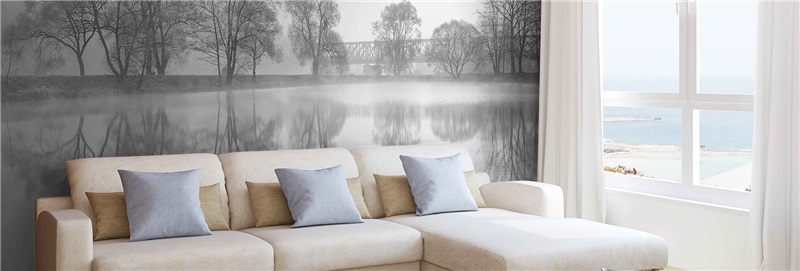
A misty forest, soft botanical, distant beach, or airy abstract design can create visual depth without making a compact room feel closed in. Designs with a horizon line, receding path, or open sky are particularly useful when a room has limited square footage. Place the mural behind the bed or desk so it reads as a destination rather than visual clutter at every angle.
In a work area, consider what will appear behind you on camera. A subtle cityscape, muted world map, or refined geometric print has more staying power than a highly detailed pattern competing with shelves, cords, and office equipment. If the room already has several functional pieces, choose a design with quieter color transitions.
For living rooms and dining areas
A large feature wall can give a temporary living room the architectural weight it lacks. Oversized florals add softness to rooms with straight-lined furniture, while stone, plaster-inspired abstracts, or landscape murals can complement more contemporary pieces. Scale matters here: a tiny repeating pattern on a wide wall may look busy, while an oversized image with a clear focal area can make the room feel composed.
Keep the dominant colors connected to items you plan to keep. Pull a warm sand tone from a beach mural into pillows, or echo the green in a forest design with a throw or plant. You do not need to match everything. Two or three repeated notes are enough to make the wall feel integrated rather than pasted on.
For nurseries and children’s rooms
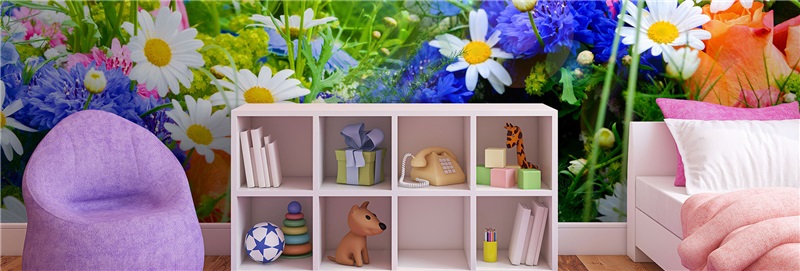
Children’s spaces are ideal for a focused wall treatment because they often need to perform several jobs at once: sleep space, play area, and a setting that feels joyful. Animals, maps, gentle florals, outer space, and illustrated landscapes can create that identity quickly. Choose a placement behind a crib or bed where the design is visible but not constantly touched by active play.
A personalized image can be meaningful, but it must be suitable for large-format printing. A small phone image may look fine on screen and lose clarity when expanded across a wall. Professional image review is especially valuable when a treasured photo is part of the project.
Material and Finish Matter More Than a Product Label
For a rental feature wall, look beyond the word “wallpaper” and ask practical questions: Is the material intended for painted drywall? What ink system is used? Does the finish resist everyday scuffs? How are panels supplied? Is installation guidance available?
Digitally printed adhesive vinyl can offer vivid color, precise custom sizing, and a clean, modern surface. Latex inks are a strong fit for interior décor because they produce rich color without the solvent-heavy odor associated with some older print methods. An anti-scratch finish is also useful in busy homes, especially near dining spaces, hallways, or a desk where chairs and bags regularly pass close to the wall.
Panel construction deserves attention. A wall mural arrives in sections, and careful alignment creates the finished image. Straight walls, a level starting point, and patient smoothing are more valuable than speed. If the wall has unusually complex trim, deep texture, or multiple outlets, consider professional installation or select a simpler location.
Avoid the Most Common Rental-Wallpaper Mistakes
The first mistake is treating removal as guaranteed. No adhesive product can promise identical results on every painted wall. Document the wall before installation with dated photos, retain any landlord approval, and follow the manufacturer’s removal directions when it is time to move.
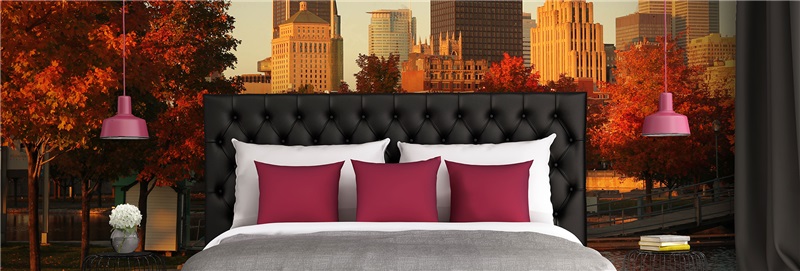
The second is choosing a mural based only on a thumbnail. Look for designs that still have a pleasing composition at wall scale. A dramatic leopard, large flower, or city skyline can be striking, but its focal point should not disappear behind a sofa or land awkwardly behind a headboard.
The third is ordering without considering light. North-facing rooms often benefit from warmer sands, blush tones, olive greens, and sunlit landscapes. Bright south-facing rooms can handle deeper navy, charcoal, saturated jungle scenes, or bolder abstract art. Requesting help with image selection and sizing can save both money and disappointment.
When a Custom Mural Is Worth It
A custom mural makes particular sense when standard dimensions leave too much blank wall, when you have a personal image with a strong story, or when a specific color palette is needed to work with furnishings. It also gives renters the freedom to make one wall feel truly theirs rather than settling for a generic accent.
Murale Design can review customer-supplied artwork for print suitability and produce wall murals to custom dimensions, which helps reduce guesswork before production. For a rental project, that support is valuable when you need to position the image around a bed, window, or existing built-in feature rather than forcing the room to fit a standard roll.
A rental wall does not need permanent changes to feel considered. Choose one surface with good light, prepare it carefully, and select imagery you will be happy to come home to. The best result is a room that feels personal now and manageable when your next address calls.